
Croatia: Why Travelers Return to These 20 Places
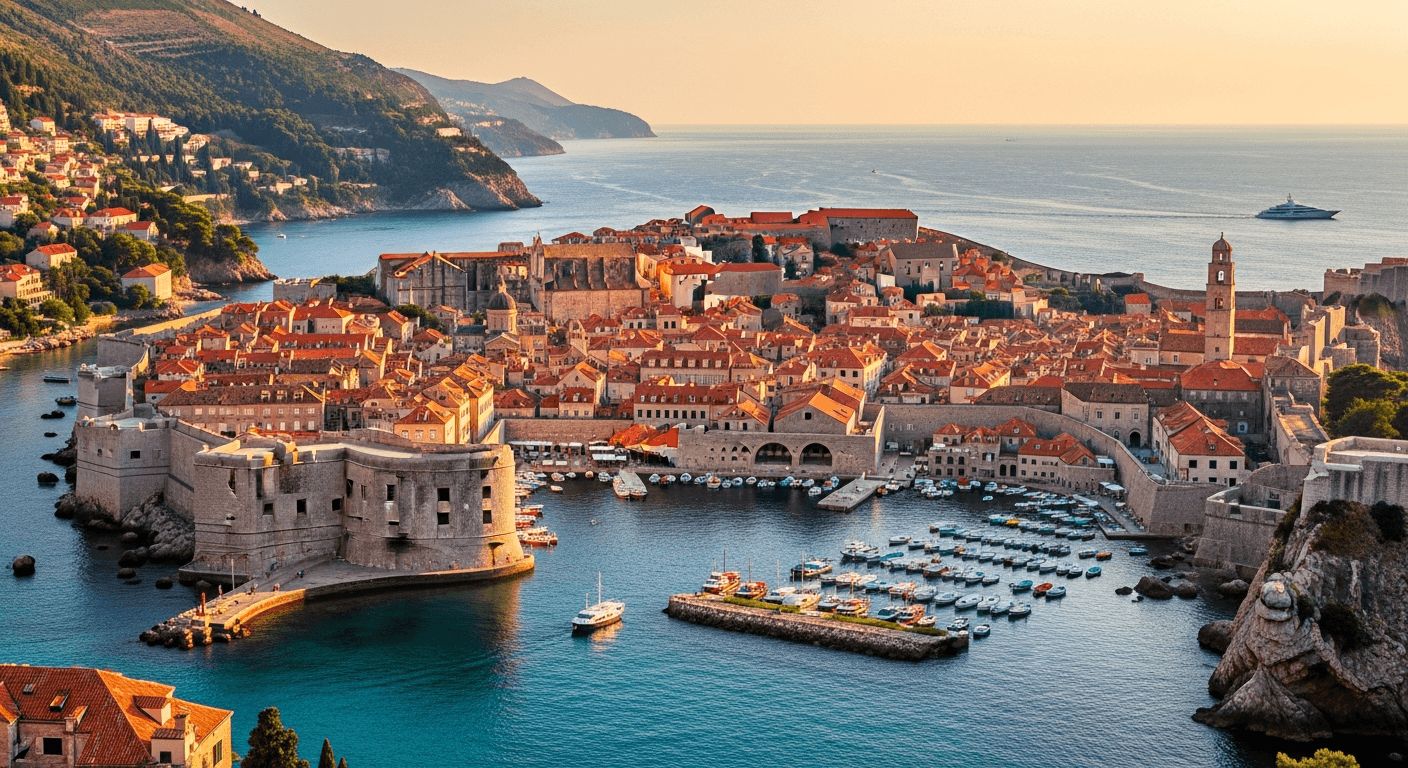
Croatia: Why Travelers Keep Coming Back to These 20 Places
The Adriatic doesn't reveal itself all at once. It whispers. You arrive in Croatia expecting postcards—azure water, terracotta roofs, Instagram moments arranged like a mood board. What you discover instead is something quieter: a place that settles into your bones, that makes you write long emails to friends at midnight, that beckons you back before you've even left.
There's an easiness to returning to Croatia that other destinations don't possess. Perhaps it's the rhythm of the coast—unhurried, genuinely hospitable, indifferent to trends. Or perhaps it's that Croatia doesn't try to be anything other than itself. The limestone cliffs don't perform. The olive groves don't apologize for their simplicity. The stone-built towns remain stubbornly, beautifully authentic.
This is a country where travelers become repeaters, where a first visit dissolves into a second, then a third, each time discovering corners that feel undiscovered despite centuries of human presence.
The Places That Keep You Coming Back
1. Dubrovnik's City Walls at Dawn
Everyone walks them, yes. But most arrive at nine o'clock when the crowds have already begun their pilgrimage. The real Dubrovnik appears before seven: a city of roosters and fishermen, of locals carrying coffee in small cups, of light that hasn't yet hardened into the glare of midday. The walls feel less like a museum exhibit and more like what they are—a living boundary between old life and sea. The stone beneath your feet tells a different story than it does when you're elbowing through tour groups. You notice the wear patterns, the spots where generation after generation has stood in precisely the same place. You understand, briefly, what it means to be a witness to continuity.
Best time: May or September. Early morning, always.
Photography moment: The moment when the sun hits the copper roofs of the Old Town and they transform from grey-brown to burnished gold—around 6:45 a.m. in May.
Insider note: Locals use the walls as their morning jog. Follow their rhythm, not the guidebook's.
2. Hvar Town's Fortress (Not the Town Itself)
Hvar town has become something of a theater production—beautiful, well-rehearsed, entirely aware of its own attractiveness. But the Fortress of Spanjola rises above it, and here, above the performance, the actual place emerges. The climb takes twenty minutes through olive groves where the silence feels earned. At the top, you're alone (almost always), standing in a stone structure that has absorbed centuries of Mediterranean light. The view isn't about Instagram coordinates; it's about understanding scale—how small human drama becomes when viewed from a height, how the sea really is endless.
Best time: Late afternoon, when the fortress begins its transformation into shadow.
Photography moment: The light traveling across the stone walls—comes around 4 p.m. in summer, 3 p.m. in shoulder seasons.
Insider note: Bring water. There's no cafe at the top, and that's part of its value.
3. Korčula Old Town at Dusk
Korčula is what Dubrovnik was forty years ago—a Venetian-built town of narrow streets, of sudden architectural surprises, of light that changes color every thirty minutes as the sun moves westward. The evening here has texture. Families emerge onto street-level doorsteps. Wine is poured into small glasses. Children weave between your ankles, absorbed in games that require no phones. Walk without a map. Turn left when you mean to turn right. The town is small enough that you'll find your way back, and lost is the only way to actually arrive.
Best time: June through September, 7 p.m. onward.
Photography moment: The moment when the sunset illuminates the narrow streets from the western end—around 8:15 p.m. in July.
Insider note: Restaurants facing the main piazza are for tourists. Find the ones tucked into side streets where locals eat.
4. Vis Island's Disorienting Quiet
Vis requires intention. It's not on the way to anywhere. You must take a ferry (hours long), and this distance is its gift. The island is sparse, sometimes lonely, occasionally unsettling in its quietness. The beaches are pebbled rather than sandy. The restaurants are straightforward, not curated. The people here are the descendants of people who chose, decades ago, to stay. There's something in that decision that lingers in the air—a commitment to life that doesn't feel like tourism.
Best time: June or September. July and August can feel crowded even by Vis standards.
Photography moment: The blue grotto, yes, but more importantly: the moment when you round a corner and see a fishing village you didn't know existed.
Insider note: Rent a scooter and drive the island's perimeter roads at sunset. The driving matters more than the destination.
5. Split's Diocletian Palace Before Breakfast
The palace is a living city—people have homes inside it, have had for nearly two thousand years. Walk through it at 7 a.m., before the shop owners have opened their gates, when it's mostly locals moving through the arches, and you'll understand something that no guidebook can explain: that history isn't a museum collection. It's someone's morning commute.
Best time: Early morning, any season.
Photography moment: Light streaming through the colonnaded hallways, creating pillars of illumination and shadow.
Insider note: Follow a local. Genuinely. Buy a coffee where they buy coffee. Sit where they sit.
6. Plitvice Lakes' Lesser-Visited Northern Trail
Plitvice is overwhelming because it's famous. But the northern trails, less traveled, less photographed, offer something the main circuit doesn't: solitude. The boardwalks here wind through forests where water moves audibly below. Mist collects in the morning. You might see three other people in an hour. The lakes themselves—sixteen of them, each distinct in color and mood—become less about visual spectacle and more about atmospheric presence.
Best time: April-May or September-October. The light is softer, and fewer visitors means you can actually hear the water.
Photography moment: Mist rising off the water in early morning; the boardwalks creating geometric lines through the forest.
Insider note: Go on a weekday if possible. Weekends are when tour buses arrive.
7. Rovinj's Backstreets (Specifically, the Western Maze)
Rovinj is charming and aware of it. But wander westward from the main square, away from the seafront, and you enter a different Rovinj entirely—residential, steep, where washing hangs between buildings and the streets are barely wide enough for a single person. This is where the actual town lives. The houses are painted faded yellow, pale green, dusty blue. There are no restaurants. You won't encounter another tourist. This is the Rovinj that locals inhabit, and stepping into it feels like being trusted with a secret.
Best time: Any season. This area is quieter regardless.
Photography moment: The afternoon light hitting the narrow street and creating a corridor of golden shadow.
Insider note: If you encounter a local, you're probably on their street. A small nod is enough acknowledgment.
8. Lopud Island's Empty Monasteries
Three islands make up the Elafiti chain, and most tourists stop at Koločep or Šipan. Lopud is quieter. It has monasteries, both active and abandoned, scattered across its modest size. The abandoned ones—you can find them without much difficulty—sit in states of beautiful decline, filled with the particular melancholy of spaces where prayer once echoed and now only wind speaks.
Best time: May-June or September-October.
Photography moment: Interior light filtered through broken windows; stone arches holding their geometry despite decades of neglect.
Insider note: Ask at the main village if you can visit. Sometimes locals have keys to spaces tourists typically can't access.
9. Makarska's Promenade at Shoulder Season
Makarska gets overlooked. It's a beach town, and beach towns in Croatia often fall into either the over-developed or under-developed categories. Makarska manages a middle ground—functional, pleasant, genuinely used by locals. Walk its waterfront promenade in May or September when the light is golden and the crowds are manageable, and you'll understand why returning visitors favor it over more famous towns.
Best time: May, September.
Photography moment: The Biokovo mountains turning purple as the sun descends behind them.
Insider note: The local fish market operates in the morning. Breakfast here is worth the early wake.
10. Zadar's Sunset from the Waterfront
Zadar faces west, which is rare on the Adriatic. This means sunset isn't just beautiful—it's the town's reason for existing at a certain hour. The entire waterfront pauses. Wine is poured. The light does something mathematics hasn't yet explained. Go at that hour. Don't photograph it. Just witness it.
Best time: May through September.
Photography moment: The moment when the sun touches the water line and the entire sky becomes various shades of orange and purple simultaneously.
Insider note: The local wine is excellent. Ask for whatever the bartender recommends.
11. Krka National Park's River Path
Krka is less famous than Plitvice but equally remarkable. A river moves through a dramatic gorge, creating waterfalls and pools. The path alongside it winds through Mediterranean vegetation—myrtle, rosemary, fig trees. The experience is less postcard-perfect and more authentically beautiful, which is harder to describe and more likely to stay with you.
Best time: May-June when water levels are high but crowds haven't peaked.
Photography moment: The river bending around a rock formation, creating a natural mirror of the limestone cliffs above.
Insider note: Bring proper shoes. The path has steep sections and wet rocks.
12. Trogir's Sunday Morning Fish Market
Trogir itself is a museum piece—a Venetian town preserved almost too perfectly. But on Sunday mornings, something real happens in the fish market near the waterfront. Locals buy the morning's catch. Vendors call out. There's an energy that predates tourism. Buy something. Have it prepared at a nearby restaurant for lunch. This transaction, simple as it is, connects you to the actual rhythms of the place.
Best time: Sunday mornings, any season.
Photography moment: Early light on the wet fish, the vendors' weathered hands, the reflection on the water beyond the market stalls.
Insider note: Prices are better if you come after 10 a.m.—vendors are eager to sell before the heat rises.
How to Actually Experience This
Getting between these places requires patience rather than planning. The buses are reliable, the ferries are reasonable, but nothing moves at highway speed. This is the point. You'll spend hours between destinations, and these hours—watching the coast from a bus window, waiting for a ferry, sitting in a café while time becomes irrelevant—these are the hours that make Croatia resonate.
Transportation shouldn't be rushed. The coastal road itself is the experience. National holidays can clog ferry schedules, so travel midweek if flexibility allows. Rent a car if you want autonomy, or trust the buses and find a book.
Dress respectfully when entering religious spaces. Toplessness is acceptable at most beaches, but erring toward convention in town centers shows respect. Tipping isn't expected but is appreciated. Learn to say "hvala" (thank you) and you'll notice how people's expressions shift.
Seeing These Places Through Travelers' Eyes
On Touratu's interactive map, you can explore routes that other travelers have traced through Croatia—the ones who came back twice, three times, who collected these places like others collect photographs. Their visual discoveries and documented routes reveal patterns: which weeks offer the best light, which seasons feel most authentic, which combinations of destinations create a journey that stays with you.
The Return Journey
Croatia doesn't hold you hostage through spectacle. It invites you back through subtlety. You'll remember a meal more than a monument, a conversation more than a view, a particular quality of light at a particular hour on a particular street where nothing extraordinary happened except that you were present for it.
This is why travelers keep returning. Not because they've seen everything, but because they've experienced something that makes them want to see more slowly, to arrive more deliberately, to stay longer and demand less.
The Adriatic will still be waiting.
Loading activities…
