
Croatia Travel Guide: Coasts, Islands & Real Experiences
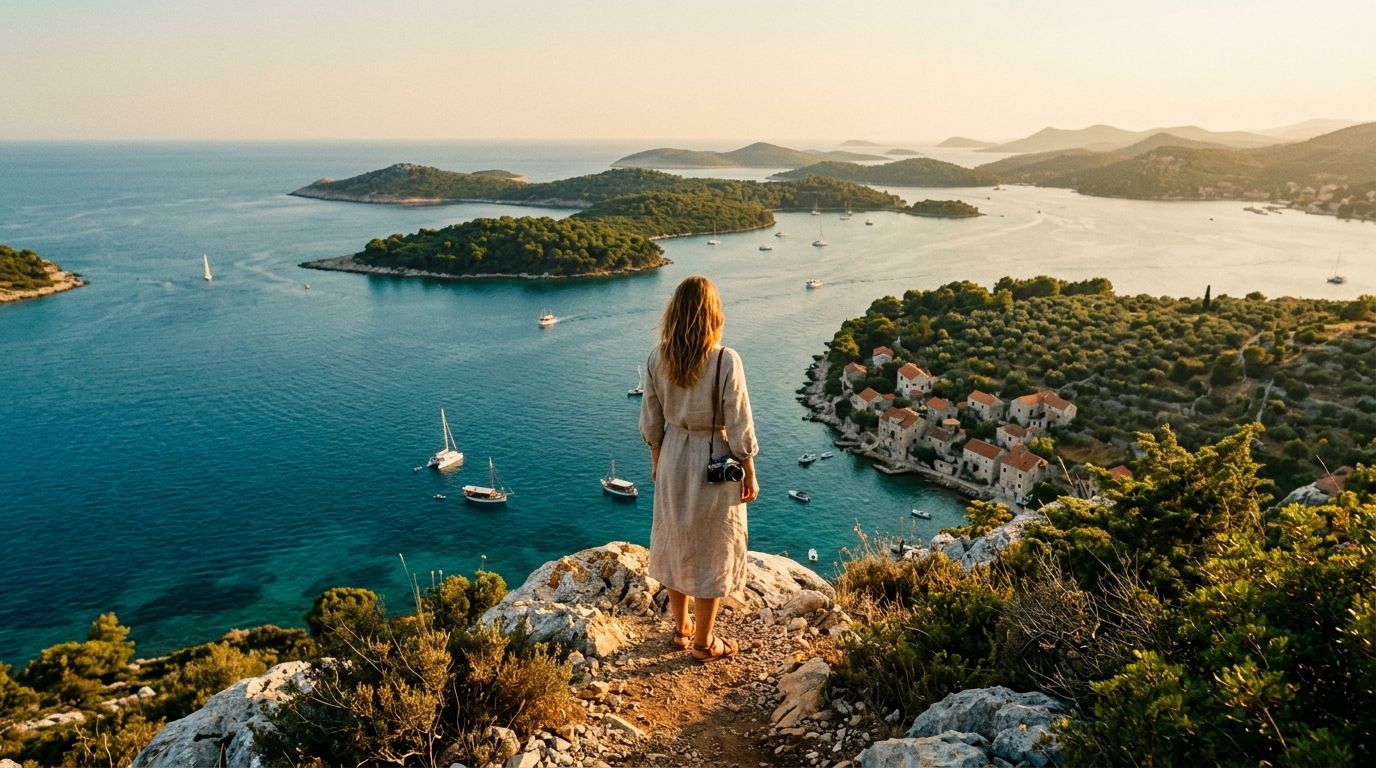
Croatia: A Country That Rewards Slow Travel
You wake up in a stone house with terracotta shutters, and the first thing you notice is the light. It hits the Adriatic in that particular way—sharp, almost white—that makes you understand why artists have always been drawn to this coast. You're not thinking about your itinerary. You're thinking about coffee, maybe a walk to the market, whether you'll take the boat out today or just sit with a book. This is the experience Croatia offers if you're willing to stop rushing through it.
Croatia has spent the last decade becoming a well-documented destination. You know the photos: red-tiled roofs cascading toward turquoise water, medieval walls glowing amber at sunset, islands scattered like dropped jewels across the Adriatic. What's less discussed is what happens when you actually arrive and realize the photographs are, frustratingly, accurate. And then what happens when you go deeper—when you find the smaller islands, the villages where tourism hasn't yet accelerated the pace of living, the restaurants run by people who are cooking what they know rather than what they think visitors want.
What Actually Makes Croatia Worth the Trip
Croatia's appeal isn't mysterious once you've been there. It's built on a few genuine advantages: geography, history layered visibly into architecture, and—still—a slower pace than Western Europe, though that's changing.
The coast is legitimately stunning. I don't mean this casually. The Dalmatian coast and the islands have a particular combination of clear water, dramatic geology, and accessible human settlement that creates something genuinely different from Mediterranean tourism elsewhere. The limestone formations create natural harbours. The weather is reliable for roughly eight months of the year. The sea temperature allows swimming from May through October. These aren't poetic observations; they're practical facts that explain why you'll actually want to spend time on the water here.
But there's something else: the visibility of history without the museum fatigue of older destinations. Walk through Dubrovnik's walls or explore the Roman ruins in Split, and you're not reading plaques in climate-controlled rooms. You're standing where people actually lived, where the daily rhythms of centuries haven't been entirely ironed smooth by restoration efforts. The stone still feels occupied.
The food works differently here too. Croatian cuisine sits at an intersection—Italian influence from across the Adriatic, Central European traditions from inland regions, Ottoman history in certain dishes and spices. You're not eating "fusion." You're eating the result of a place that's always been at a crossroads. The seafood is straightforward and local. The wines from small producers inland are excellent and unknown outside the region. The coffee culture is seriously Italian-influenced, which means you can get a decent espresso anywhere, and the pace of sitting in a cafe isn't rushed.
What to Expect When You're Actually There
The reality of visiting Croatia depends entirely on where you go and when. Dubrovnik and Split are cities with real infrastructure, museums, nightlife, and all the things cities have. They're also crowded—genuinely crowded—from June through September. If you arrive in July expecting solitude, you'll be disappointed. But if you arrive understanding that you're visiting a popular destination and plan accordingly, they're genuinely worthwhile. Dubrovnik's walls provide an actual walk through medieval military architecture. Split's Diocletian's Palace isn't a ruin; it's a functioning neighbourhood where laundry hangs outside thousand-year-old stone, and you can get lunch in a restaurant built into Roman arches.
The islands are where many travelers find what they actually wanted. Hvar has become somewhat fashionable, but venture to less-discussed islands—Vis, Korčula, Mljet—and you'll find the rhythm that drew you to the Mediterranean in the first place. These places have tourism infrastructure without being entirely tourism. You'll still find family-run guesthouses, restaurants where the owner knows the fisherman who caught your lunch, villages that aren't performing their own authenticity.
Inland Croatia is systematically overlooked, and this works in your favour. Zagreb is a legitimate Central European capital with galleries, markets, nightlife, and none of the tourists-per-square-metre ratio of the coast. The Plitvice Lakes are genuinely impressive—a series of terraced lakes with waterfalls that justify the crowds, if you go early or late in the day. The Istrian Peninsula (the northwest) feels almost Italian, with hilltop towns, truffle forests, and wine that's genuinely good.
The actual experience involves: walking a lot. Taking boats between islands. Sitting in cafes longer than you'd plan. Eating well without trying too hard. Occasionally hitting traffic in peak season. Occasionally finding that a restaurant you wanted is full and having to pivot. Realizing that "nearby" on the map is often 45 minutes away by local roads. Learning that Croatian drivers are aggressive but not actually dangerous. Discovering that English is spoken in tourism areas but less so elsewhere, which isn't a problem, just a reality.
Planning a Visit: The Practical Reality
Best time to visit: May-June or September-October. The water is warm enough (around 19-22°C), the crowds are manageable, and the weather is reliable. July-August is hot, crowded, and expensive. November-April is quieter but the water is genuinely cold, some restaurants close, and ferry schedules are reduced. Winter is actually pleasant if you're not expecting beach swimming—think 10-15°C, clear skies, almost no tourists.
How long: This entirely depends on your travel style. You can see the major sights (Dubrovnik, Split, maybe one island) in 5-7 days if you're moving efficiently. To actually experience Croatia—to sit with the slower pace, explore multiple islands, spend time inland—plan 10-14 days minimum. Two weeks is ideal. Three weeks allows you to stop forcing yourself forward.
Getting around: Ferries are the authentic way to move between islands and the obvious choice for island hopping. They're reliable, affordable, and genuinely pleasant. Driving is practical if you want flexibility on the mainland or to reach smaller places. Buses are cheap and extensive but slow. Flights between cities (Dubrovnik to Split, for example) are relatively short routes that often aren't worth the time at the airport.
Crowds: Avoid peak summer (July-mid-August) if solitude matters to you. Do visit in shoulder seasons if you want to actually experience the place. Early morning or late evening swims and wall walks in peak season beat afternoon crowds.
Getting there: Most major European cities have budget flights to Split or Dubrovnik. Driving through Europe is feasible if you're coming from neighboring countries. There's no particular advantage to flying to Zagreb unless you're specifically visiting the capital.
What's Actually Nearby
The Plitvice Lakes sit inland from the coast—a 2-3 hour drive from either coast, depending on which end you approach. They're a series of terraced lakes connected by waterfalls, walkable by boardwalk paths. Genuinely impressive, though managed as a national park with entry fees and crowds. Worth a day trip, not worth staying overnight unless you're specifically focused on the area.
The Istrian Peninsula (roughly the northwest corner) feels distinct—more Austrian and Italian influence, quieter than the Dalmatian coast, known for wine and truffles. Towns like Rovinj and Motovun are genuinely beautiful, less crowded than coastal alternatives. If you're visiting Split or Dubrovnik, Istria requires planning and time; it's not a quick add-on.
Montenegro is directly south of Dubrovnik—Kotor Bay is spectacular and feels less developed than Croatian alternatives, though it's catching up quickly. The drive is roughly 90 minutes south from Dubrovnik. If you're traveling the coast, it's worth considering, though it's not quite a "nearby" detour.
Is It Actually Worth Visiting?
Yes, with nuance. Croatia is a real place with genuine appeal, not hype. The coast is beautiful and accessible. The food is good. The pace is slower than northern Europe. The weather cooperates most of the year.
The honest caveat: it's become fashionable, and parts of it feel more touristy than they did a decade ago. Dubrovnik can feel crowded and commercial. Some islands are developing rapidly. Restaurant prices have inflated toward Western European levels.
None of this means it's not worth visiting. It means approach it as what it is—a Mediterranean destination with excellent geography, real history, good food, and increasingly good tourist infrastructure—rather than as an undiscovered paradise. The experience will be better that way.
If you travel in May or June, book accommodations early but expect manageable crowds. If you spend time away from Dubrovnik and Split—on smaller islands, inland, in quieter season—you'll find the experience you expected when you booked the flight.
Quick Facts
- Best for: Island hopping, coastal walks, Mediterranean seafood, slower travel
- Language: Croatian; English widely spoken in tourism areas
- Currency: Croatian Kuna (KN) or Euro in some places
- Getting around: Ferry between islands; rental car for mainland flexibility
- Average meal: 80-150 KN ($12-20 USD) for dinner in local restaurants; more in tourist areas
- Beach time: June-September reliably swimmable; May and October are marginal
The Better Way to Explore
Croatia rewards curiosity and flexibility. The real insight comes not from ticking boxes but from actually being present—taking an unplanned detour, sitting longer over coffee, taking a different boat, asking what's good to eat today rather than where you should eat.
Use Touratu's interactive map to explore routes between islands, plan ferry journeys, and discover how different regions connect. Watch travel videos of neighborhoods you're considering to get a genuine sense of pace and atmosphere before you arrive. The combination of visual planning and real-world perspective helps you make decisions that match what you actually want from the trip, not what you think you should want.
Croatia is worth visiting because it's genuinely good, not because it's undiscovered. Travel there with realistic expectations, spend time in places that matter to you, and allow the pace to settle. That's when the photographs start to make sense.
Loading activities…
