
China Travel Guide: Top Things to Do & Plan
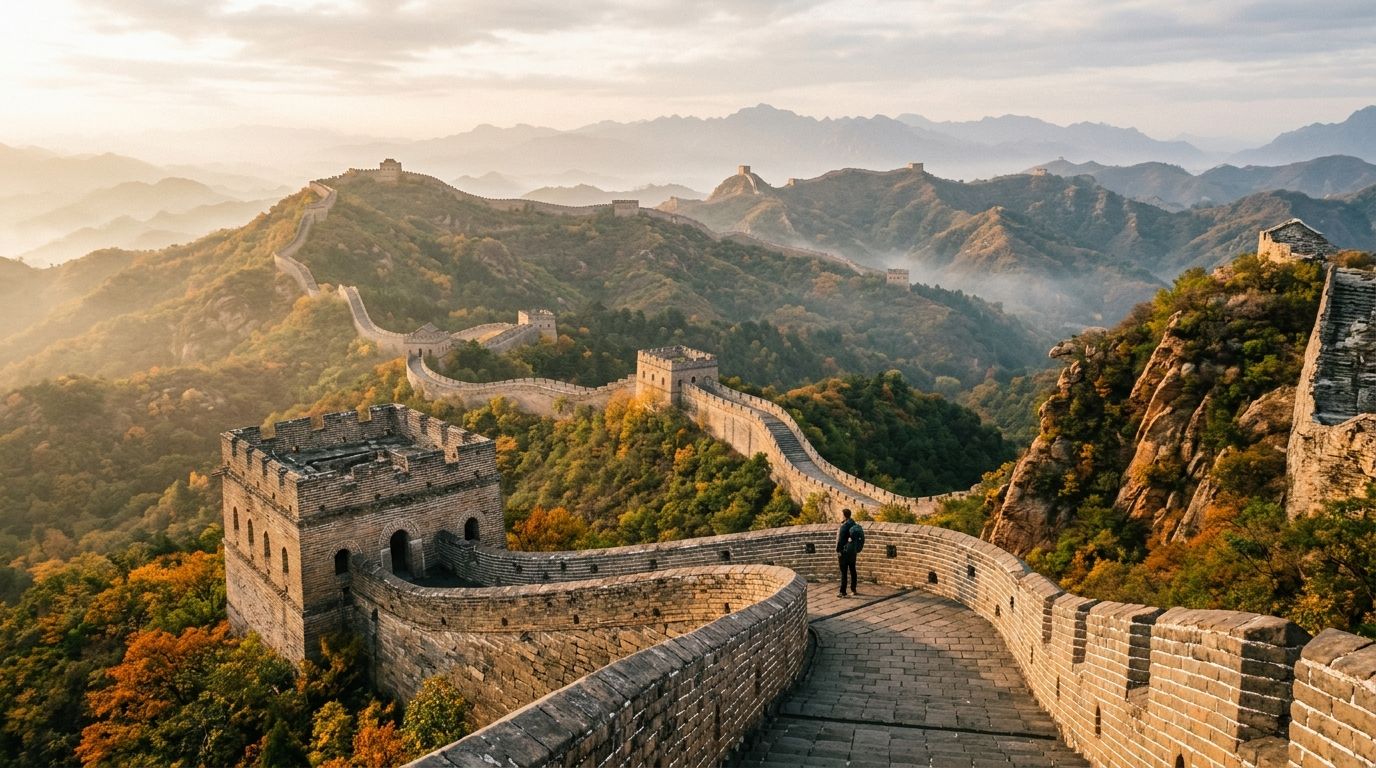
China Travel Guide: Where Ancient Empires Meet Modern Ambition
The sound hits you first—not the silence you might expect from a country so vast, but the hum of 1.4 billion people moving forward at once. You're standing in Shanghai's Pudong district at dusk, watching the sky turn from steel blue to something the painters gave up on capturing, and the lights of the financial towers flicker on like someone's turning pages in a book written in electricity. This is China. Not the China of your imagination, but something far more complicated, more alive, and infinitely more interesting than any postcard could suggest.
China isn't one place. It's a contradiction you have to live inside to understand—and that's precisely why it matters as a travel destination.
What Makes China Actually Worth Your Time
Most travel guides will lead with the Great Wall or the Forbidden City, and sure, both are extraordinary. But what actually makes China unforgettable is watching modernization collide with tradition in real time, often within the same city block.
I've walked through Beijing's hutongs (traditional alleyways) where an elderly woman was hanging laundry outside a house her family built three generations ago, while construction cranes towered overhead. That juxtaposition—that's what China is. It's not packaged heritage or preserved-in-amber culture. It's living, working, arguing, building, eating culture that hasn't stopped to think about whether tourists find it photogenic.
The food system alone justifies the entire trip. Chinese regional cuisine is so complex that what you eat in Sichuan bears almost no resemblance to what you eat in Guangdong, yet both are unmistakably Chinese. And it's not expensive. A phenomenal meal for two—proper restaurant, good ingredients—costs less than the coffee you skipped on the way to the airport. This changes how you travel. You're not rationing experiences or choosing between dinner and sightseeing. You're eating constantly, trying everything, discovering preferences you didn't know you had.
What to Actually Expect
In the tier-one cities (Beijing, Shanghai, Guangzhou): Everything works with brutal efficiency. The metro systems are clean and logical. Apps like Alipay and WeChat Pay handle transactions so seamlessly that carrying physical money feels archaic. English signage is adequate in major tourist zones, though Google doesn't work and most websites are blocked without a VPN. You'll navigate this easily, but you're always aware you're a guest moving through systems built for the locals living here.
Beijing feels like a city that's continuously editing itself. The Forbidden City remains genuinely impressive—the architecture is intricate, the scale is massive, and there's real history compressed into those walls. But the crowds are substantial, especially spring and autumn. The Great Wall at Mutianyu (two hours north) is less swarmed than the famous sections but still busy. The Ming Tombs nearby are worth a half-day if you have time. What surprised me most was the hutong neighborhoods: chaotic, authentic, where you'll find better food and genuine human interaction than in the polished tourist districts.
Shanghai operates like a city that's entirely reinvented itself and isn't done yet. The Bund is exactly what you think it is—colonial-era buildings facing a river, modernized but still recognizable from 1920s photographs. The real interesting part is everything else: the art district in Jing'an, the vintage lanes of the former French Concession where you can spend hours wandering, the rooftop bars with views that genuinely deserve the Instagram attention. The Shanghai Museum is actually excellent if museums matter to you.
In the second-tier cities (Chengdu, Xi'an, Hangzhou): You encounter China that moves slightly slower and feels less tailored for Western visitors. These cities are still enormous—Chengdu has 20 million people—but they're less relentlessly polished. The Giant Panda sanctuary outside Chengdu is worth the trip if that appeals to you, though the experience is controlled and the animals aren't exactly frolicking for your entertainment. The food scene in Chengdu is where you'll find some of your best meals: hotpot restaurants where you cook in a shared broth and the numbing sensation of Sichuan peppercorns becomes a thing you crave.
Xi'an's Terracotta Army is genuinely moving—thousands of life-sized clay soldiers created for an emperor's afterlife, arranged in formation. It's touristy, yes, but the artifact's significance isn't marketing. The scale and detail actually warrant the journey. The city walls are walkable and provide perspective on how ancient cities were structured.
In the mountains and natural areas: The landscape changes completely. Guilin and the Li River are famous for their karst peaks rising vertically from flat earth—the scenery that inspired classical Chinese paintings. This translates to reality. A bamboo raft journey down the Li River is tourist infrastructure, but not fake. Zhangjiajie has towering sandstone pillars that inspired Avatar; it's genuinely visually unusual. Less crowded alternatives exist, but they'll require more logistical problem-solving and Chinese language ability.
Planning Your Visit: The Practical Stuff
Best time to visit: Spring (April-May) and autumn (September-October) offer decent weather and fewer crowds than summer. Winter is cold in the north, pleasant in the south. Summer is hot, humid, and absurdly crowded. Plan accordingly.
Duration: Two weeks minimum if you want to see multiple regions without exhausting yourself. A week works if you stay in one or two cities. The distances are deceptive—China is enormous, and the flight/train system, while excellent, eats time.
Getting around: The HSR (high-speed rail) system is phenomenal. Trains are clean, fast, and reliable. Booking through apps like Trip.com or directly at railway stations is straightforward. Domestic flights are cheap and frequent; the airports work well. Taxis and ride-sharing apps (Didi, the Chinese Uber) are inexpensive. Public transport in cities is excellent, though navigating without Chinese language or apps requires more effort.
Money: Bring US dollars or withdraw at ATMs. Credit cards work in major hotels and some restaurants, but China has largely gone digital. You'll need Alipay or WeChat Pay for most transactions, which requires a Chinese bank account or significant hassle. Some travelers link a foreign credit card; YMMV.
Language: English speakers are common in major cities' tourist zones, rare elsewhere. Download a translation app. Carry written addresses of destinations. This isn't a barrier, just a reality that makes phones essential.
Crowds: Yes, they're real, especially at famous sites during Chinese holidays (Chinese New Year, National Day). These dates are worth avoiding. Smaller cities and second-tier destinations see fewer visitors and offer richer experiences for that reason.
Nearby Places That Matter
Taiwan: Culturally Chinese but politically separate, about two hours by flight from Shanghai or Beijing. Democratic, Japanese-influenced, with incredible food. The relationship is complicated; understand the situation before making comments to locals.
Tibet (Lhasa): Spiritually distinct, with high altitude and sensitivity around Han Chinese tourism. Requires permits; consider the political situation before visiting. The culture is Tibetan first, Chinese second.
Vietnam (Hanoi or Ho Chi Minh City): South from Guangzhou, roughly 24 hours by train or 3 hours by flight. Different political system, French colonial legacy, and food culture that diverged historically from China. Worth a separate trip.
Is It Worth Visiting?
Yes, absolutely—but not for the reasons you might think. You're not visiting China to collect sights like Pokémon cards or complete a checklist of Must-See monuments. You're visiting because it's one of the few remaining places on Earth that operates under genuinely different assumptions about how society should work. It's challenging, fascinating, occasionally frustrating, and always educational. The food alone justifies it. The scale of human ambition visible in the cities justifies it. The historical weight compressed into museums and ancient sites justifies it.
What might not justify it: A discomfort with controlled internet, language barriers, crowded spaces, or situations where Western assumptions about how things work don't apply. If you need comfort and predictability, book six days in Japan instead. China requires curiosity and flexibility.
Quick Facts
- Population: 1.4 billion
- Official language: Mandarin Chinese (highly tonal, genuinely difficult)
- Currency: Chinese Yuan (CNY)
- Best seasons: Spring and autumn
- Visa: Most Western nationals need a visa (30-90 days typical)
- Altitude issues: None in major cities; Lhasa requires acclimatization
- Vaccination requirements: None currently, but check before traveling
China rewards travelers who approach it with genuine interest rather than tourism checklist mentality. You'll encounter architectural marvels and culinary revelations. You'll also encounter bureaucratic opacity and internet restrictions. Both are part of the same reality. The honesty of that contradiction—the willingness to let you see both the accomplishment and the cost—is what makes it worth the time and effort.
Before you book, explore routes and watch travel videos on Touratu's interactive map. See actual journeys through China, understand the logistics, and plan an itinerary that fits your actual interests, not someone's curated "best of" list. Your trip will be better for it.
Loading activities…
