
Central Macedonia Greece: History Beyond Tourism
Central Macedonia: Where Greece Reveals Its Quieter Ambitions
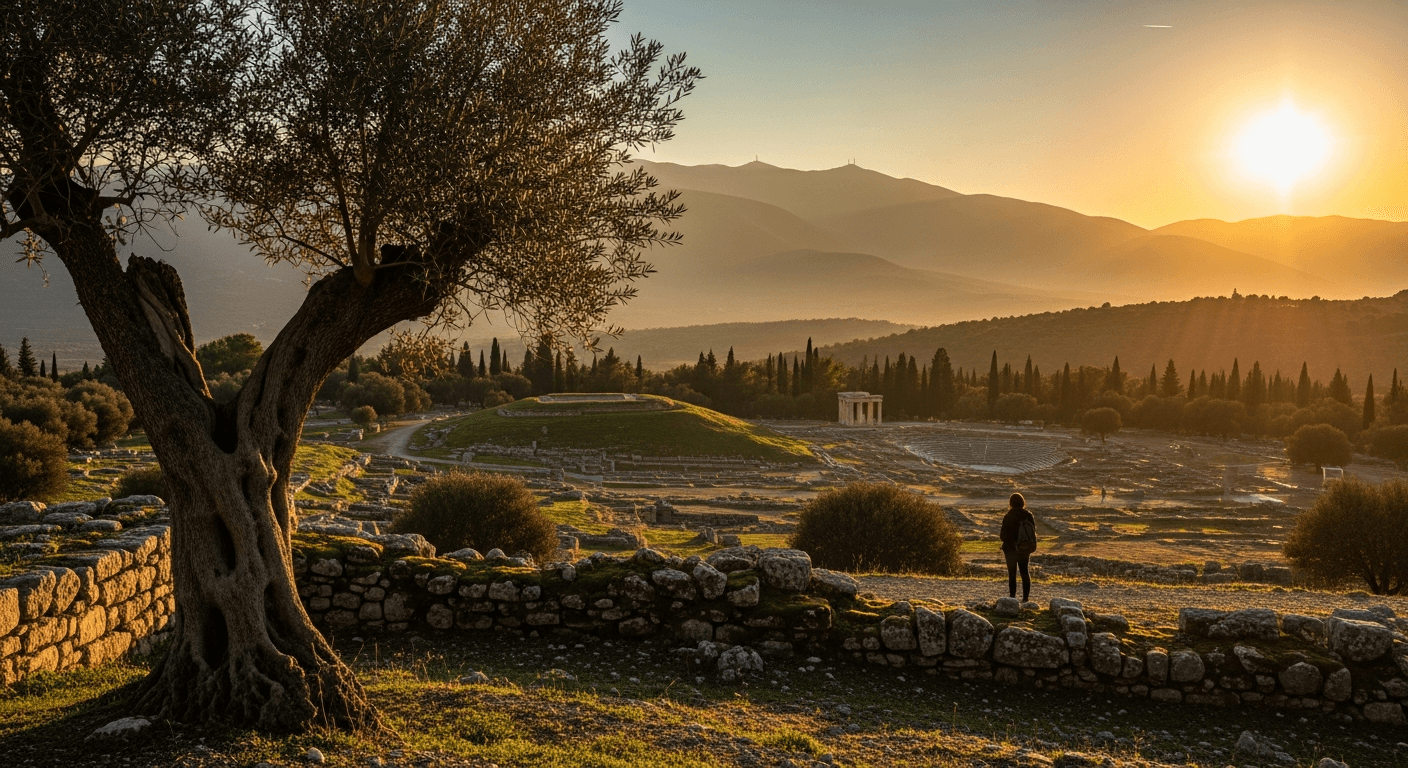
There's a particular kind of silence you find in the northern parts of Greece—not the hush of abandonment, but the quiet of a place that's stopped trying to impress you. You're standing in Thessaloniki's Ano Poli district at dusk, watching the Byzantine church domes catch the last of the golden light while the city sprawls below, utterly indifferent to whether you find it beautiful. That's Central Macedonia. It doesn't perform. It just exists, layered with Roman temples, Ottoman minarets, and modern Greek life all occupying the same street corners.
Most travellers rush through this region on the way to somewhere else—Athens behind them, Meteora ahead. But Central Macedonia, the vast area anchored by Greece's second city and stretching through ancient Macedonian plains and into Thrace, reveals itself slowly. It's not a place you check off a list. It's a place where you realize you've been wrong about what Greece actually is.
What Makes Central Macedonia Genuinely Memorable
The region's power lies in its refusal to be singular. Thessaloniki alone contains more history per square kilometer than most European cities manage in their entirety. Walk from the waterfront toward the Old Town and you're moving backward through centuries—Ottoman hammams, Venetian fortifications, Early Byzantine churches, Roman structures. But here's what matters: these aren't museum pieces separated by velvet ropes. They're street-level elements of contemporary life. A monastery courtyard becomes someone's shortcut home. A Roman forum remains a gathering space.
Beyond the city, Central Macedonia is where you understand what Philip II and Alexander the Great were actually working with. The plains aren't dramatic—they're agricultural, human-scaled, dotted with small towns that have learned to coexist with their own significance. Pella, birthplace of Alexander, isn't a reconstructed theme park. It's an archaeological site where you can feel the actual geography of ambition—the rivers that mattered, the elevations that provided advantage, the land that demanded someone's vision.
The Halkidiki peninsula creates three fingers reaching into the Aegean, and each has its own rhythm. The western coast has become increasingly developed, sure, but venture inland or north, and you find villages where the primary concern is still the season's crops and whether the summer brought enough tourists to justify the year's quiet.
What to Expect: Walking Through Layers
Thessaloniki as your anchor point
Plan on spending three to four days here, minimum. This isn't a city you see in one rushed morning. Start in the Old Town—Ano Poli—where the architecture genuinely reflects different eras of occupation and development. The cobbled streets climb steeply, and the views across the Thermaic Gulf are substantial, but the real reward is getting lost deliberately. You'll find small Byzantine churches tucked between apartment buildings, courtyards with lemon trees, tavernas where the owner greets regulars by name and looks at you with mild confusion if you want to ask what the special is.
The Aristotelous Square and waterfront area represent postwar reconstruction and modern urban planning—it's handsome and properly scaled, lined with cafés where people actually sit for hours doing nothing in particular. This isn't performance either; it's just Greek social life.
The museums here are excellent but not sensational—the Archaeological Museum holds important Macedonian finds, and the Rotunda (originally a Roman mausoleum) has genuine presence. The White Tower is less essential; it's more significant historically than revelatory to visit.
Beyond the city: Pella and Vergina
Pella requires a day trip west. The archaeological site is less visually impressive than Delphi or Knossos—it's been through considerable weathering—but it's where Alexander was born, and standing in the actual landscape he would have known feels different than reading about it. The museum on-site is compact and well-arranged, and the relative lack of crowds means you're experiencing the site as an actual place, not a spectacle.
Vergina, further inland, is the location of the royal Macedonian tombs discovered in the 1970s. The underground museum is architecturally striking, built into a hill to preserve the site's integrity. The finds are extraordinary—gold, weapons, intricate decoration—but the experience is quietly overwhelming rather than bombastic. You're looking at evidence of power from 2,300 years ago, and it's presented with scholarly respect rather than theatrical drama.
Mount Athos (viewing from afar)
The Holy Mountain is accessible only to male pilgrims with special permission, but you can appreciate it from the Halkidiki peninsula's eastern side. Ouranoupoli is a small seaside town where you can see the monasteries across the water and understand the geography of this monastic republic. It's not a substitute for accessing the mountain itself, but it provides context.
The Halkidiki beaches and villages
The region's three peninsulas—Kassandra, Sithonia, and Athos—offer different experiences. Kassandra is more developed and touristy, suitable if you want beach facilities and nightlife. Sithonia is the middle ground—coastal beauty without complete commercialization. Both are crowded in July and August, tolerable in June and September.
But the genuine discovery for most visitors comes in the inland villages and northern reaches. Arnaia, in the Cholomontas mountains, is a traditional settlement with stone houses and views across the plains. It's genuinely quiet, and the tavernas serve food that reflects the region's agriculture, not tourism.
Planning Your Visit: The Practical Architecture
Best time to visit
Late April through May is ideal. The weather is warm without being oppressive, the spring light is exceptional for photography, and the tourist infrastructure is available without the summer crush. September into October is similarly excellent—Mediterranean summer heat has broken, but the water is still swimmable.
July and August are feasible but require accepting crowds and heat. Winter is quieter but many smaller attractions and accommodations reduce hours or close entirely.
How long and how to structure it
A proper visit requires 4-6 days minimum. Three days for Thessaloniki (moving slowly, not rushing), one full day for a day trip to either Pella and Vergina, and 1-2 days for either Mount Athos viewing or Halkidiki peninsula exploration. If you're basing yourself in Thessaloniki and doing day trips, this pace is sustainable. If you're moving through the region more broadly, adjust accordingly.
Getting there and moving around
Thessaloniki has an international airport with connections throughout Europe and the Mediterranean. Buses are efficient and cheap for getting to surrounding regions. A rental car provides freedom for visiting smaller sites and villages, particularly if you want to explore Halkidiki properly. The road quality is generally good, driving standards are... spirited, but manageable.
Cost and practical considerations
Central Macedonia is substantially cheaper than Athens or the Cyclades. A meal in a traditional taverna might cost €10-15 per person. Accommodation in Thessaloniki ranges from €30-40 for reasonable budget options to €100+ for comfort. Archaeological sites charge €8-15 entry.
Nearby Places Worth Considering
Meteora (about 2.5 hours south from Thessaloniki): The monasteries built on massive rock formations are visually remarkable and worth the trip if you have time. The villages below are less interesting, but the monasteries themselves justify the journey.
Pelion peninsula (2-3 hours south): The mountain villages here—Volos, Makrinitsa, Tsagarada—offer a different Greece, with stone architecture, mountain green spaces, and a less touristed atmosphere.
Thassos island (2 hours north by car and ferry): A quieter Greek island without the Cycladic tourism infrastructure, suitable if you want beach time without the intensity of more famous islands.
Is It Worth Visiting? The Honest Assessment
Yes, but not for the reasons most travel writing will tell you. Central Macedonia isn't the most visually stunning region of Greece. It's not the most relaxing. The beaches are pleasant but not transcendent. The food is hearty rather than transcendent (though excellent).
What makes it worth your time is that it reveals something true about Greece that more famous destinations obscure. It's a region where history is context, not content. Where people still live, work, and pursue their ordinary lives in extraordinary places. Where you can have a conversation with a shopkeeper that isn't a sales transaction. Where silence and space are more common than spectacle.
If your travel goal is efficiency—seeing famous places quickly—skip it. If you're interested in how places actually work, how history settles into daily life, how a city functions for itself rather than for visitors, Central Macedonia rewards the investment of time.
Quick Facts
- Region: Northern Greece, anchored by Thessaloniki
- Population: Thessaloniki ~380,000; the broader region approximately 1.8 million
- Language: Greek; English spoken in tourism areas, less so in villages
- Currency: Euro
- Best for: History, archaeology, urban exploration, quieter Greece
- Worst for: Beach-focused vacations, nightlife (relative to other regions)
Central Macedonia doesn't announce itself. There are no signs saying "wonder awaits here" or "magic begins now." You have to arrive with patience and curiosity, willing to spend time in a place rather than merely passing through it. The Byzantine churches won't make you cry. The archaeological sites won't leave you speechless. But Thessaloniki at dusk, the agricultural plains where armies once maneuvered, the villages where life continues its quiet work—these accumulate into something real.
Explore the routes, attractions, and hidden corners of Central Macedonia using Touratu's interactive map. Plan your journey through the region, watch travel videos that capture the authentic rhythm of this extraordinary corner of Greece, and discover the places that most travellers miss.
Loading activities…
