
Capital Governorate Bahrain: Top Attractions Guide
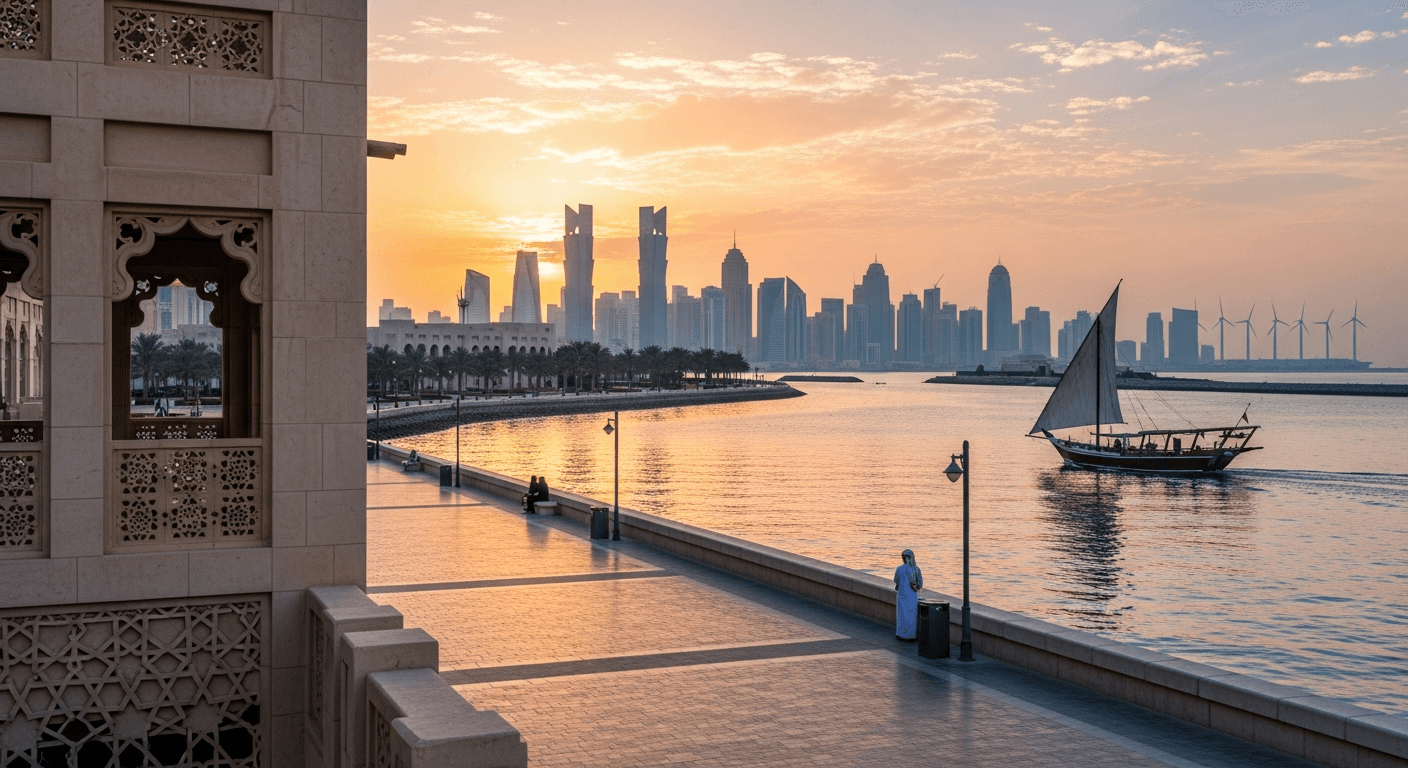
Capital Governorate, Bahrain: Where Gulf Tradition Meets Modern Energy
The call to prayer drifts across Manama's skyline just as the sun bleeds orange over the Persian Gulf. You're standing somewhere between centuries—a street vendor arranging fresh juice bottles outside a gleaming financial tower, a teenager in traditional dress scrolling through her phone beside a 400-year-old fort. This is Capital Governorate. Not the Instagram-friendly version, but the actual one, where heritage and commerce collide in ways that feel genuine rather than choreographed.
Most travellers rush through Bahrain as a transit point or weekend escape. Capital Governorate—the administrative heart containing Manama and several other towns—gets treated as a quick urban pit stop between beach resorts and pearl-diving tours. That misses something worth your time. This is where you actually understand how modern Arabia works, thinks, and lives.
The Geography of Contrasts
Capital Governorate isn't a single attraction. It's a collection of distinct neighbourhoods, each with a different personality. Manama, the capital, is the engine. The Financial Harbour gleams with glass towers that host regional banking headquarters. Bab al-Bahrain—the old souk entrance—sits a few kilometres away in an entirely different era.
The district spreads across roughly 117 square kilometres, home to around 400,000 people (a number that shifts constantly with migrant workers). It's compact enough to navigate without a car, though taxis and ride-sharing apps dominate how locals move around.
What makes this genuine is how unpolished it remains. There's no museum-quality preservation happening here. The old quarter is lived-in. Shops change owners. Buildings get renovated badly. Power lines crisscross everything. It's messier than heritage tourism usually allows, which is precisely why it feels real.
What Actually Happens Here
The Souks and Old Manama
Start at Bab al-Bahrain, the ornate gate that marks the traditional entrance to Manama's souks. Don't expect the staged theatricality of Marrakech's medinas. These souks are working markets where locals buy their groceries, perfumes, and textiles. The air hits thick—a combination of spices, diesel fumes, and salt spray from the nearby coast.
The gold souk is genuinely interesting if you understand what you're watching. Vendors work without fixed prices. The performance of negotiation is real, not manufactured for tourists. You'll see Emirati women in full abayas examining bracelets with the intensity of jewellers. Pakistani workers buying supplies. Filipino domestics picking out gifts to send home.
One peculiarity: prices are negotiable in some shops, fixed in others. There's no clear demarcation. Locals know the difference; you'll have to ask. It's an inefficiency that gives the whole experience texture.
The spice souk smells like cardamom, saffron, and dried limes. You can buy small quantities of anything or enormous sacks if you're actually cooking. The vendors will chat if you're interested; they'll ignore you if you're just browsing. It's straightforward.
Non-Muslims can visit (shoes off, modest dress required—women don't need to cover their hair, but shoulders and knees matter). This is one of the Gulf's largest mosques, completed in 1988, with a dome you can see from several kilometres away.
The interior is vast and genuinely beautiful in its simplicity. The dome is breathtaking—yes, I'm breaking my own rule, but it actually is. No photographs inside, which is oddly refreshing in an age of constant documentation. You experience it rather than curate it.
Visitors are few, so it never feels crowded. The spiritual atmosphere is authentic. You're not there as a cultural specimen; you're there as a guest in someone's place of worship.
Manama's Modern Centre
The Financial Harbour is worth seeing precisely because it's not traditionally beautiful. It's aggressively contemporary—glass, steel, yacht-club aesthetics, restaurants with price tags that would make you laugh. This is where Bahrain's petro-wealth concentrates. It's useful for understanding modern Gulf economics, less useful if you're seeking authentic culture.
But walk through it. Notice the languages (English dominates; Arabic is secondary). Observe the demographics (almost entirely expat professionals during business hours). It's a window into something real, even if it's not traditionally touristic.
Riffa Fort
Ten kilometres south of Manama, this 18th-century structure sits on slightly elevated ground overlooking a date palm plantation. It's a genuine ruin—partial walls, nothing reconstructed for photo opportunities, minimal signage. You need imagination to picture it intact.
The fort matters historically because it controlled Bahrain's interior during a period when control meant survival. Now it's mostly quiet. Local families sometimes picnic nearby. The views toward the plantation have a melancholy beauty.
Visiting requires a bit of effort—not easily accessible by taxi, and there's no tourist infrastructure. That obscurity is part of its appeal.
What to Expect (The Honest Version)
Heat and Humidity
Capital Governorate sits on the Gulf coast with zero shade from natural geography. Summer temperatures (May-September) regularly exceed 45°C, and the humidity makes the air feel solid. Your clothes will stick to your body within minutes of outdoor walking.
This isn't poetic or atmospheric. It's unpleasant. Locals stay indoors or move between air-conditioned spaces. Winter (November-February) is genuinely pleasant—around 20-25°C with occasional rain.
Alcohol and Social Norms
Bahrain is the most liberal Gulf state regarding alcohol. Licensed restaurants and bars serve it. But the old souks and religious areas maintain traditional norms. Women in particular should dress modestly (no shorts, sleeveless tops, or transparent clothing). Men can get away with more, but respectful dress matters.
Ramadan changes everything. During fasting hours (sunrise to sunset), eating, drinking, or smoking in public is offensive to locals, even if technically permitted. Restaurants close. The pace of life slows dramatically. If you visit during Ramadan, plan accordingly.
Crowds and Timing
Bahrain attracts a specific tourism pattern: Gulf businesspeople on weekday visits, Saudi families on weekends (weekends are Friday-Saturday), and a steady flow of Asian migrant workers on their days off.
The souks are least crowded in early mornings (before 9 am) and mid-afternoon (1-3 pm), when locals nap. They're busiest on weekend evenings and Friday mornings.
Navigation
Taxis are metered and reliable. Ride-sharing apps work well. Walking is feasible in specific areas (Bab al-Bahrain to the old quarter, the Financial Harbour) but not practical for reaching Riffa or distant sites. The local bus system exists but is designed for residents, not tourists.
Planning Your Visit
Duration
Two days is realistic for Capital Governorate specifically. One day for the old quarter and souks, one for the mosque, Riffa, and Manama's modern centre. Three days allows you to actually sit in cafés, eat without rushing, and absorb the rhythm.
Best Time
November through March. October and April are acceptable but warming. May through September is genuinely miserable unless you're indoors almost constantly.
Getting There
Bahrain International Airport is 20 kilometres from Manama. A taxi costs approximately 15-18 BHD (roughly $40-48 USD). Ride-sharing apps are slightly cheaper. The airport is efficient and straightforward.
Where to Stay
Manama has hotels across all price ranges. The downtown area (near Bab al-Bahrain) puts you near the old quarter, with noise as a tradeoff. The Financial Harbour area is quieter and more upmarket. Budget-conscious travellers might stay in less central neighbourhoods and taxi to attractions.
Money Matters
The Bahraini Dinar (BHD) is pegged to the US Dollar. ATMs are abundant. Most places accept cards, though small souk vendors prefer cash. Negotiating prices is common in the souks; fixed prices apply in modern shops.
Nearby Worth Your Time
Muharraq (15 km north)
The old capital, with its own souks and the Sheikh Isa bin Ali House, an 18th-century merchant's home that's been partially restored. Less touristy than Manama's quarter, more authentically lived-in.
Al Areen Wildlife Sanctuary (30 km south)
Arabian wildlife in semi-captive conditions. Not a safari experience, but useful if you want to see Arabian oryx or gazelles without trekking the desert.
The Causeway to Saudi Arabia
The 25-kilometre King Fahd Causeway is an engineering feat and a political statement. You can drive partway for views of the Gulf and the border. Lots of context, minimal tourism infrastructure.
Is It Actually Worth Visiting?
Yes, but with caveats.
Capital Governorate isn't Petra) or Angkor Wat. You won't leave transformed by architectural majesty. What you get is a working snapshot of how a modern Gulf city actually functions—the messy reality rather than the polished postcard.
The souks are genuinely interesting if you enjoy observing how commerce and community intertwine. The mosque is beautiful without being ostentatious. Riffa Fort matters if you care about historical context. The Financial Harbour is useful for understanding modern Bahrain's economy.
If you're in the region and have three days, spend one here. It'll deepen your understanding of the Gulf more effectively than another resort stay. If you're passing through on a layover, the old quarter and Bab al-Bahrain are worth four hours, though you'll only graze the surface.
If you're seeking untouched natural beauty or undiscovered beaches, look elsewhere. If you're curious about how modern Arabia actually works—not theoretically, but observationally—Capital Governorate delivers.
Quick Facts
- Population: ~400,000 (within Capital Governorate)
- Language: Arabic (English widely spoken in commercial areas)
- Currency: Bahraini Dinar (BHD)
- Best Time: November-March
- Getting Around: Taxi, ride-sharing apps, walking in limited areas
- Main Attractions: Bab al-Bahrain souks, Al Fateh Grand Mosque, Riffa Fort, Financial Harbour
- Visa: Most nationalities receive a free 14-day tourist visa on arrival; check current requirements
The Closing View
Capital Governorate works best when you approach it without Instagram-tourism expectations. No Instagram-worthy sunsets, minimal "hidden gems," no narrative arc that wraps up neatly in a caption.
What you get is texture: the sound of bargaining in the spice souk, the moment when you recognize a financial trader in traditional dress heading to prayers, the view of date palms from a fort that's been watching the same horizon for 250 years.
To explore the routes connecting Capital Governorate with other Bahraini districts, check out Touratu's interactive map. You can visualize how the districts connect, plan efficient routes, and watch travel videos that show the actual pace and feel of moving through these spaces. It transforms how you approach visiting.
Loading activities…
