
Canada Travel Guide: Coast to Coast Experience
Canada: What Actually Happens When You Travel Coast to Coast
You're standing on a rocky outcrop in British Columbia, watching the Pacific slam into granite cliffs with enough force to send spray 20 metres into the air. Behind you, a grizzly bear is fishing for salmon. To your left, someone's hiking boot print is slowly filling with rainwater. This is the moment you realise Canada isn't a single destination—it's a country of severe, unforgiving beauty that doesn't perform for tourists. It demands something from you instead.
Most travel guides approach Canada like it's a checklist: Niagara Falls, the Rocky Mountains, the national parks. They're not wrong about what's there, but they miss something essential. Canada's actual power lies in the contradiction between its vastness and its intimacy. You can drive for eight hours and see nothing but forest and sky. Then you'll round a bend and find yourself in a town of 300 people where the locals know the exact conditions of every hiking trail within 50 kilometres.
I've spent months moving through Canada—not rushing to tick boxes, but staying long enough to understand how geography shapes what people do here. And that's the thread worth pulling.
What Makes This Place Actually Memorable
The first thing that strikes you about Canada is the silence. Not the poetic, serene silence of a quiet hotel room—the deep, almost aggressive silence that comes from genuinely remote landscape. The kind where you hear your own heartbeat and the wind moving through pine trees a kilometre away.
The second thing is that Canadians seem genuinely unbothered by tourism. In most popular destinations, there's a performance happening. Here, you get the sense that the wilderness was there long before visitors arrived and will be there long after. The hiking trails aren't maintained for Instagram. The bears aren't aware they're supposed to seem noble. The glaciers are simply melting at their current rate regardless of how many people photograph them.
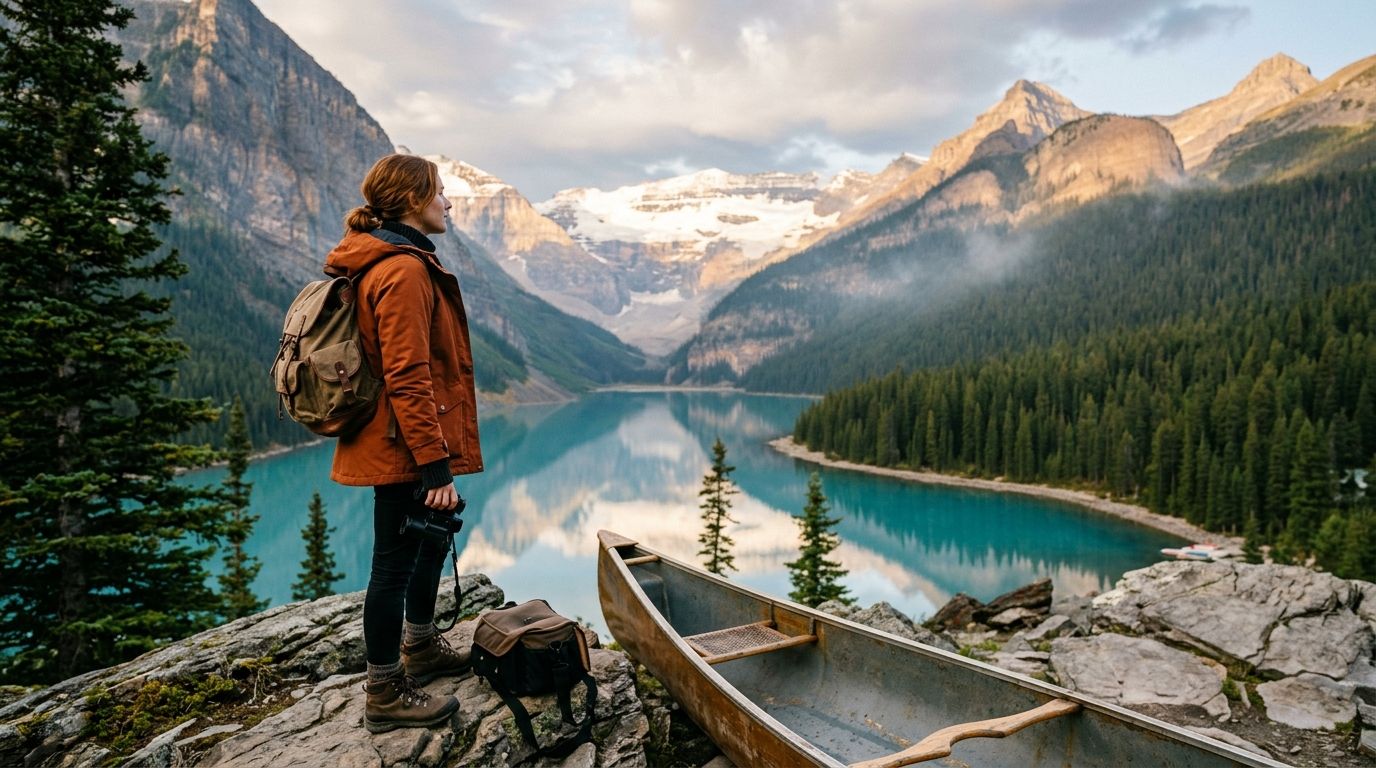
This creates a peculiar experience: you're visiting somewhere genuinely significant, without feeling like you're intruding on a carefully curated attraction. A family from Toronto might be ahead of you on the Lake Louise trail. But they're there for the same reason you are—because the landscape demands to be experienced directly, not consumed.
The country's geography creates distinct regional experiences. The West Coast (British Columbia) is temperate rainforest meeting mountains meeting ocean. It's green and severe. The Rockies are the postcard version—dramatic peaks, turquoise lakes, wildlife—but requiring actual physical effort to experience properly. The prairies are genuinely empty and genuinely vast. Alberta's badlands are weird and geological. The Great Lakes region is water and forests and small cities with real history. The Maritime provinces are coastal and weathered and connected to the Atlantic. Each region has completely different character, climate, and what you'll actually do there.
This matters because Canada isn't a place you can properly experience in two weeks from a rental car hitting highlights. The country's scale makes that actually disrespectful. It's like reading plot summaries instead of novels.
What to Expect: The Reality of Traveling Canada
The landscapes are genuinely remote. If you're hiking in Banff or Lake O'Hara, you might see 200 people on the trail. That feels crowded until you realise the trail is 20 kilometres long and covers terrain where a wrong step means a genuine fall. The crowding disappears. Conversely, you can drive into British Columbia and spend a full day seeing maybe five other cars. This is normal.
The wildlife is real and largely indifferent to you. Bears aren't endangered in Canada. You might see one. More likely, you'll see bear scat, warnings, and the spaces bears have just left. Moose are genuinely large animals that sometimes walk onto highways. Elk herds exist. Cougars are in the mountains. This creates a different psychology while hiking—there's an actual reason to make noise and pay attention. It's not theatre. It changes how you move through landscape.
The weather is extreme and changes fast. Summer temperatures can hit 28°C in interior British Columbia and 25°C in the Rockies. Winter is serious—-20°C is common, and in some regions, that's mild. Spring and fall are unpredictable. You need actual gear, not just aesthetic outdoor clothing. This matters because it means many experiences are genuinely seasonal. You cannot comfortably hike in the Rockies in November. You cannot comfortably explore coastal British Columbia in January unless you enjoy severe rain and poor visibility.
Towns between attractions are actual towns. You'll drive through communities where the main economy is logging, mining, or agriculture. The diners serve genuinely good coffee and food made for people who work outside. The hardware stores are better stocked than the souvenir shops. This is refreshing and a bit disorienting if you're used to tourism economies.
Distances are deceptive. When a map says something is 400 kilometres away, plan on 5-6 hours of driving through terrain where you won't see services for hours. Gas tanks matter. Cell service matters. These aren't complaints—it's simply how the country is structured. You need to plan around this, not resent it.
Planning Your Visit: Honest Framework
Best time depends on what you want. Summer (June-September) is when most of the country is accessible and pleasant. July and August are warmest but also when most tourists arrive. September is arguably better—still warm, fewer crowds, autumn colours starting. Spring (April-May) is mud season in most regions and unreliable weather. Winter (November-March) is genuinely cold but stunning if you're into winter activities. The prairies are accessible year-round. The coasts are wet year-round.
How long do you actually need? A week gets you into one region properly. You could spend a week in BC and see temperate rainforest, mountains, and coast without rushing. You could do a week in Alberta hiking and seeing the Rockies without it feeling desperate. Two weeks lets you move between two regions without speed-driving. Three weeks is when the trip starts feeling like actual travel rather than tourism completion. If you have a month, you could move from BC through the Rockies into the prairies and see genuinely different landscapes.
Getting around: Internal flights are expensive. Driving is standard—you'll want to rent a car. The Trans-Canada Highway is mostly good, two-lane road through interesting country, though some sections are genuinely monotonous. Flying into Vancouver, Calgary, or Toronto makes sense depending on what you want to see. Inter-city buses exist (Greyhound, regional operators) but are slow. Trains exist (VIA Rail) and are scenic but not faster than driving.
Crowds and when to avoid them: Banff and Lake Louise are absolutely mobbed in July-August. September is noticeably quieter. The Icefields Parkway between Lake Louise and Jasper is crowded mid-summer. Niagara Falls is always busy but less so in shoulder seasons. Most of coastal BC sees fewer tourists outside summer. The prairies are never really crowded. Interior BC is rarely crowded. You can avoid tourism rush, but it requires not being in the most famous places during peak season.
What actually costs money: Accommodation ranges from $60-200+ per night depending on location and season. Meals are moderate outside tourist towns. National park fees are per-vehicle ($8 CAD/day or $136 CAD annual pass). Guides for specific activities vary. Hiring a guide for backcountry hiking or wildlife viewing costs $150-300+ daily. Gas is expensive (currently around $1.50 CAD/litre).
Nearby Places Worth Understanding
Pacific Rim National Park Reserve (BC): Genuinely wild coastline with rainforest, beaches, and serious weather. Tofino is the gateway town. It's wetter and more remote than the Rockies. If you want to see how Pacific storms interact with forest, this is the place.
Jasper National Park (Alberta): Less crowded than Banff, equally dramatic. Good for longer backcountry hikes. The town is small and functional. The Icefields Parkway drive between Banff and Jasper is legitimately worth a day.
Gaspésie (Quebec): Where the Appalachians meet the St. Lawrence. Genuinely distinctive landscape that's different from the mountains elsewhere. Small towns, good hiking, less tourist infrastructure than the Rockies.
Is It Worth Visiting? The Honest Answer
Yes, with the understanding that Canada demands engagement. This isn't a destination where you can passively consume experiences. The landscape won't perform on schedule. The weather won't cooperate because you read it was supposed to. You'll walk trails where you see the width and scale of the country in a single day's hiking.
If you're looking for "magical experiences" and Instagram moments, you'll find those. But the real value is in spending enough time somewhere that the initial strangeness wears off. You stop thinking about what you're supposed to be experiencing and start actually observing. That's when Canada reveals itself.
The cost is real, the scale is intimidating, and the planning is more complex than beach destinations. But the country is fundamentally honest. It doesn't pretend to be something it's not. That's increasingly rare.
Quick Facts
- Population: 40+ million, mostly in cities within 300km of US border
- Size: 10 million square kilometres (larger than the US)
- Official languages: English and French (though French is primarily spoken in Quebec)
- Currency: Canadian Dollar (CAD)
- Entry: Citizens of most countries need a valid passport; US citizens need proper documentation
- Driving side: Right side of the road
The Map Is Your Real Travel Resource
Canada is too vast and varied to navigate properly with a traditional guidebook. Visit Touratu's interactive map to explore regional routes, see travel videos from real journeys through the country, and connect with detailed guides on specific regions. You'll see how people actually move through Canada, where the valuable stopping points are, and what the gaps look like between attractions. The videos show real conditions—weather, crowds, how long drives actually take—rather than curated highlights.
Whether you're planning a week in the mountains, a coastal journey, or a cross-country drive, Touratu gives you both the map and the context to travel thoughtfully rather than rushing through a checklist.
Loading activities…
