
Bulgaria Travel Guide: Things to Do & Explore
Bulgaria: A Traveller's Honest Reckoning with an Underrated Country
The Black Sea coast unfolds at dusk like someone's carelessly discarded watercolour painting—the sky bleeding orange into the water, Nessebar's medieval churches silhouetted against the blur. You're standing in a narrow cobbled alley that's been walked for nearly 3,000 years, and a local woman is hanging laundry from a window above your head. She doesn't acknowledge you. The tourists have mostly left for the day. This is the Bulgaria that rarely makes it into the highlight reels.
Bulgaria isn't on the standard Western European circuit. You won't find it clogged with cruise ship crowds or dominated by chain hotels. What you will find is a country that feels genuinely lived-in—a place where the people move through their days with a kind of unhurried purpose, where history isn't cordoned off in museums but embedded into daily life. The question isn't whether Bulgaria is worth visiting. It's whether you're ready to step outside the familiar patterns of European travel.
What Makes Bulgaria Different
Bulgaria occupies a peculiar position in European geography and culture. It's not Eastern Europe in the sense most Western travellers imagine it. It's something older and stranger—a place where Orthodox Christianity, Ottoman influence, and Soviet pragmatism have all left their fingerprints on the landscape and the people.
Walking through Sofia's central neighbourhoods, you'll pass nineteenth-century mansions next to Soviet-era apartment blocks next to gleaming glass office towers. The architecture doesn't apologize for its contradictions. Neither do the people. Bulgaria has a dry, unsentimental humour that takes a few encounters to appreciate. The service isn't always warm in the way you might expect from a Mediterranean country, but it's efficient and genuine. Waiters won't pretend enthusiasm; they'll give you honest recommendations.
The natural landscape has weight to it. The Rila Mountains rising from Sofia feel immense in a way that feels different from Alpine countries—the trees are denser, the light softer. Hiking here, you'll encounter monasteries that appear suddenly, integrated so completely into the landscape that they seem to grow from the earth rather than sit upon it. Rila Monastery, the most famous, exists in a kind of sacred quiet that's hard to replicate elsewhere. The iconography is dense, intricate, almost overwhelming in its devotion.
The Danube in the north is genuinely magnificent—a working river lined with small settlements that have a lived-in quality rather than the polished tourism aesthetic of similar European waterways. And the Black Sea coast, while increasingly developed, still holds pockets of genuine substance. Nessebar's old town is one of the few genuinely preserved medieval settlements on the coast, with Byzantine churches that predate most European cities' existence.
What to Actually Expect
Sofia. The capital is compact and navigable on foot. The city centre circles around Alexander Nevsky Cathedral—a golden-domed Orthodox structure that dominates the skyline. The cathedral is less a place of worship and more a statement of national identity. Inside, the silence is almost architectural. The nearby National Archaeological Museum houses one of Europe's finest collections of ancient Thracian artefacts; the gold treasures are genuinely remarkable.
Sofia's cultural life is substantive. The opera is world-class and costs about what you'd pay for a coffee in Western Europe. The gallery district around Largo has been quietly revitalized. Small restaurants in residential neighbourhoods serve food that's carefully prepared—not flashy, just good. The city doesn't feel touristy in the aggressive sense; visitors are present but not overwhelming.
Rila Monastery and the Mountains. A day trip from Sofia takes you into the southern mountain range. Rila Monastery appears after a winding road through forest—a complex of pale stone buildings arranged around courtyards, with the church at the centre. The intricate murals inside are dense with biblical narrative and symbolism. The monastery has housed monks since the tenth century. The current monks are welcoming but keep to their routines; you're not their focus, which somehow makes the place feel more authentic.
The hiking around Rila is straightforward and rewarding. Seven Lakes is the classic route—a trail that connects glacial lakes of varying sizes, each with its own character. The landscape doesn't have the dramatic peaks of the Alps, but it has subtlety. The light changes constantly. You'll likely encounter other hikers but rarely crowds.
Nessebar and the Coast. The old town of Nessebar is a peninsula connected to the modern resort town by a narrow causeway. Once you're in the old town, the resort vanishes. The narrow lanes wind between Byzantine churches, Ottoman-era houses, and archaeological sites. The Churches of Saint Sophia and Saint Stephen are architecturally significant—simple stone structures with Byzantine proportions. Walking here at sunset, when the tour groups have departed, the medieval geography becomes apparent.
The coast has changed dramatically in the past decade. Burgas, further south, has developed into a proper city. But if you move away from the main beaches, you'll find quieter settlements. Sozopol, about forty minutes south of Nessebar, is a working fishing village with a pleasant old town and much less tourist infrastructure. The beaches are functional rather than stunning, but they're genuinely relaxing because they lack the resort atmosphere.
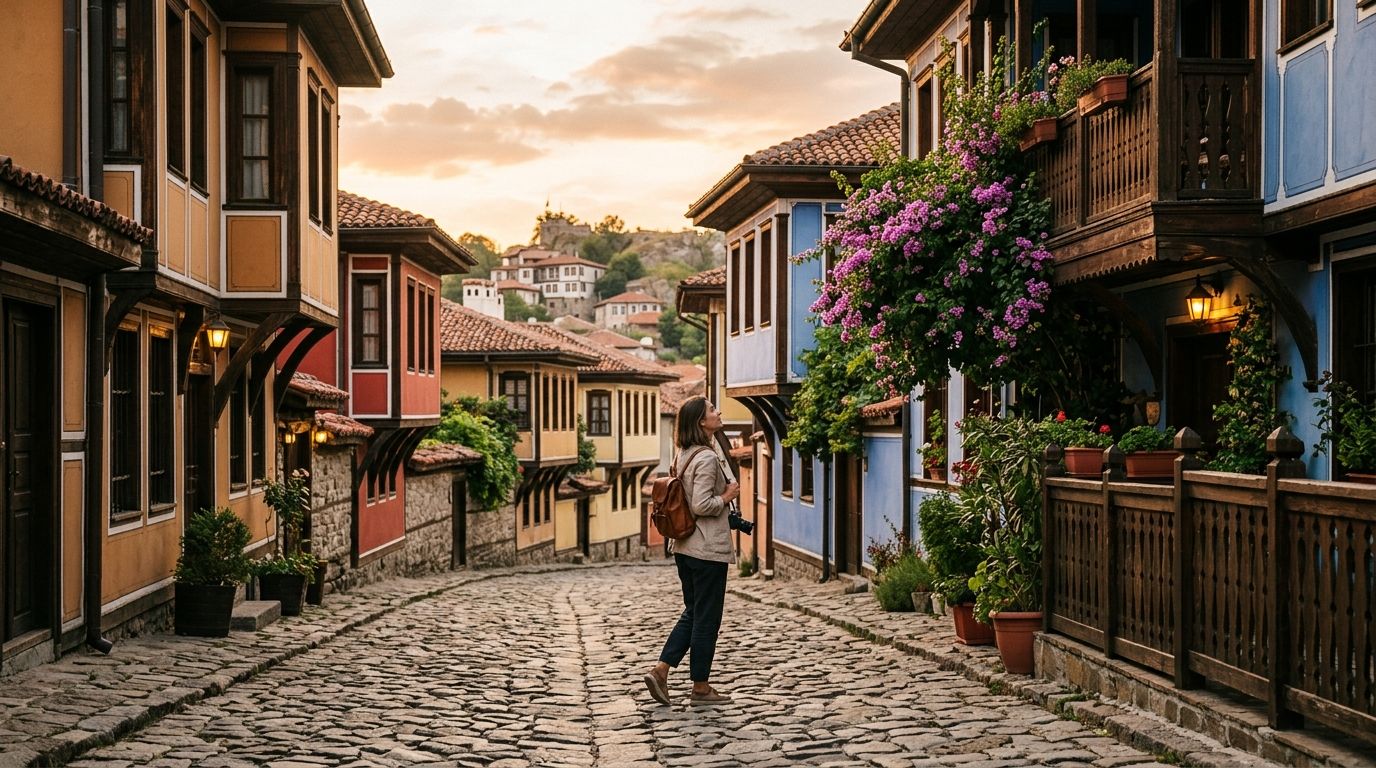
Plovdiv. The second-largest city is underrated even by those who've heard of Bulgaria. The old town, perched on hillsides, has a completely different character from Sofia. Roman theatre ruins dominate the skyline. The houses are nineteenth-century Ottoman-era structures with elaborate wooden bay windows. The town feels less developed than Sofia, more genuinely provincial. The food scene is strong here—less fashionable than Sofia but more rooted in local tradition. This is a place to stay for two days and actually absorb rather than tick off.
The Danube and Northern Bulgaria. If you have time, the Danube region offers something completely different. Vidin, on the river, has medieval fortress ruins and a genuinely frontier-town quality. The small settlements along the river—Oryahovo, Lom—feel genuinely untouched by tourism. The Danube itself is a working river with fishing villages and commercial traffic, which gives it a reality that's absent from more touristy European waterways.
Planning Your Visit
Timing. May-June and September-October are optimal. Summer (July-August) brings crowds to the coast and humidity to the cities. Winter is possible but cold and grey. Spring offers good weather and manageable crowds. Autumn is my preference—the light is golden, the heat has broken, and the summer tourists have mostly gone.
Duration. Ten days allows you to experience Sofia, do a mountain excursion, and visit the coast without feeling rushed. A week focuses your trip geographically. Two weeks lets you add Plovdiv and perhaps a Danube section without hurrying.
Getting Around. Sofia's airport connects to most European hubs. Ryanair and Wizz Air have created cheap flight connections. Rental cars are inexpensive and roads are reasonable. Alternatively, buses and trains work fine for main routes, though they're slower. The rail network is extensive but feels Soviet in pace—reliable but unhurried.
Costs. Bulgaria is genuinely affordable. A decent hotel room in Sofia costs 40-60 euros. Meals range from 8 euros for basic food to 20-30 euros for good restaurants. Activities and entrance fees are negligible by Western European standards. Budget travellers can exist very comfortably here.
Crowds. Sofia attracts visitors year-round but never feels overwhelmed. Nessebar can get busy in summer but the old town absorbs crowds better than many medieval towns. Rila Monastery has visiting hours but doesn't feel commercial. Generally, you won't struggle with overtourism.
Nearby Places Worth Considering
Bansko. A mountain town that's developed as a ski resort but retains a genuine village character in its old centre. In summer, it's a good base for hiking the Pirin Mountains. The town has restaurants and accommodation but hasn't surrendered its functionality to tourism.
Koprivshtitsa. A nineteenth-century Bulgarian town where the architecture has been preserved intact. It's small enough to feel intimate but significant enough to be genuinely interesting. It's not touristy in a negative sense—just understated.
Kazanlak. The rose valley to the east of the central mountains produces most of Bulgaria's rose oil. In May and June, the fields are blooming. The Valley of the Roses Festival celebrates this annually. It's genuinely fragrant, genuinely beautiful, and genuinely less trafficked than you'd expect.
Is Bulgaria Worth Your Time?
Yes, but not for the reasons people usually visit countries. Bulgaria isn't spectacularly beautiful in the immediately obvious way. It won't give you postcards you can instantly recognize. What it offers is substance—a country where tourism hasn't fundamentally altered the rhythm of life, where you can have genuine interactions with locals, where history feels embedded rather than presented, where your money stretches, and where the cultural experience is genuinely different from Western Europe.
The food won't astonish you but will satisfy you. The people aren't unusually warm but are genuinely helpful. The landscapes aren't dramatic but are genuinely pleasant. The cities aren't fashionable but are genuinely interesting. These negations are actually positives. Bulgaria offers the experience of European travel without the infrastructure that often diminishes authenticity elsewhere.
If you're accumulating destinations like checkmarks, Bulgaria might feel slight. If you're actually interested in understanding how a country works, how people live, what history looks like when it's embedded rather than preserved, then Bulgaria offers something real.
Quick Facts
- Population: ~6.8 million
- Capital: Sofia
- Language: Bulgarian (Cyrillic script); English spoken in tourist areas, less so elsewhere
- Currency: Bulgarian Lev (BGN); 1 EUR ≈ 1.96 BGN
- Best Months: May-June, September-October
- Time Zone: EET (UTC+2)
- Visa Requirements: EU citizens don't need visas; many other nationalities qualify for visa-free entry
- Religion: Predominantly Eastern Orthodox Christian (~60%)
Final Thoughts
Bulgaria works because it hasn't yet become a destination designed primarily for tourism. The infrastructure exists, the accommodation is available, the attractions are accessible, but the country still functions as a place where Bulgarians live rather than as a stage set for visitors. This won't last indefinitely. Development is accelerating. Travel is increasing. The calculus will eventually shift.
For now, though, Bulgaria offers something increasingly rare in European travel: genuine engagement with a place that's going about its business and happens to be interesting. You'll see real daily life, understand how history shapes present reality, and return with actual stories rather than photographs that could have been taken by anyone.
To explore Bulgaria's best routes, view firsthand videos of these destinations, and discover bookable activities tailored to your interests, check out Touratu's interactive map. You can navigate through regions, watch travel videos that capture the real rhythm of the country, and book experiences directly—all in one place. It's the clearest way to plan an authentic Bulgarian journey before you arrive.
Loading activities…
