
Bulgaria: Top places to Visit
Bulgaria: Why Travelers Keep Coming Back to These 20 Places
The Balkans whisper rather than shout. Bulgaria, in particular, has learned to keep its secrets—not out of reluctance, but because some places are too layered, too complicated by beauty, to distil into a single photograph. You come for the golden beaches or the mountain peaks, perhaps, but you stay because of what happens in the spaces between: a conversation with a pensioner in Plovdiv's old town, the weight of centuries pressing down from Sofia's Ottoman minarets, the taste of shopska salad eaten at a wooden table while the Danube flows past at dusk.
This is a destination that rewards the curious over the hurried. Bulgaria doesn't perform for visitors; it simply exists, and invites you to exist alongside it. The 20 places that follow aren't ranked by Instagram potential or architectural significance—though many possess both. They're gathered here because they've proven capable of lodging themselves in a traveler's memory, of creating that peculiar ache that sends people back, year after year, to sit in the same café or walk the same ancient street.
1. Sofia's Alexander Nevsky Cathedral
The largest Eastern Orthodox cathedral in the world doesn't announce itself with fanfare. You round a corner in the city center and suddenly you're standing before it—a Byzantine hulk rendered in cream and gold, its dome catching light as though it holds something precious inside. The cathedral demands an hour of your time and gives back far more. The mosaics swim with religious narrative; the acoustics carry chants that feel older than history.
Best time: Early morning or late afternoon, when the light acquires what photographers call intention. Winter afternoons are particularly hushed.
Insider observation: Most visitors photograph the exterior. Go inside. Sit on a pew when a service isn't happening. Watch how light moves across the marble floor.
Photography moment: The dome framed through the entrance archway, particularly at golden hour, captures both the cathedral's monumentality and its surprising intimacy.
2. Plovdiv's Old Town (Staria Grad)
Plovdiv is Bulgaria's second city, but that ranking diminishes what it actually is: a living museum that never stopped being inhabited. The old town climbs a hillside in layers of Roman, Byzantine, Ottoman, and European architecture, each stratum visible in the exposed brick and stone faces of the restored houses. Walk the narrow streets and you're moving through different centuries simultaneously, your senses recalibrating constantly.
Best time: Spring, when bougainvillea spills over garden walls and the air carries neither summer heat nor winter damp.
Why it stands out: Unlike preserved medieval towns that feel curated, Plovdiv's old quarter breathes. Children chase cats down cobblestone alleys. Washing hangs from balconies. Art galleries and small museums occupy renovated homes without feeling precious about it.
The experience: Stumble into a courtyard café where an elderly man sits playing a traditional instrument. Order coffee. No rush. This is what time does in Plovdiv—it loosens its grip.
3. Rila Monastery
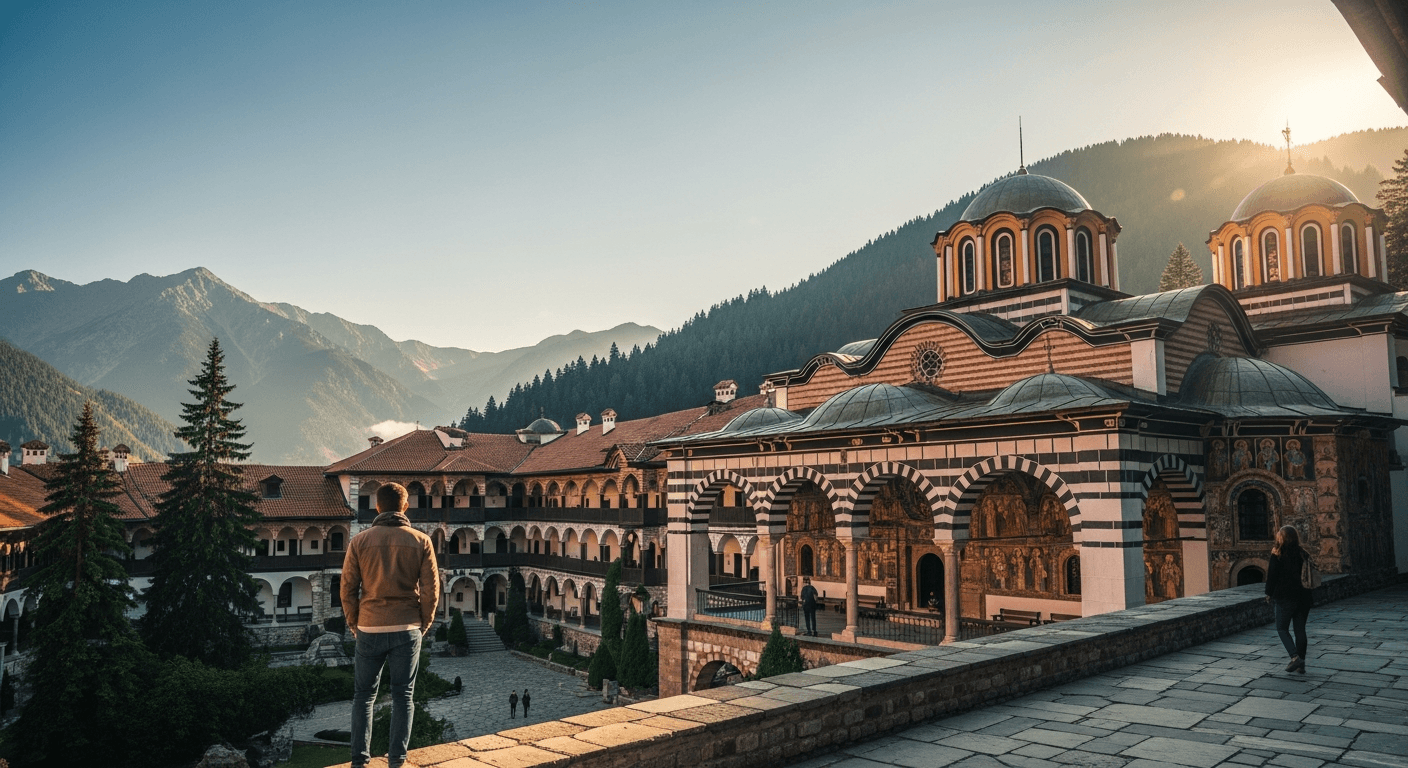
Approximately 120 kilometers from Sofia, Rila Monastery sits in a mountain valley like something from medieval legend. The complex consists of a central tower, a church, and surrounding buildings arranged around a courtyard in which nothing feels accidental. Every fresco, every inscription, every architectural decision seems to have been made with centuries of contemplation behind it.
Best time: Late September through early October, when summer crowds thin but the weather remains stable.
Photography moment: The main church's entrance is architecturally speaking irresistible—arches within arches, frescoes visible even in shadows, an aesthetic harmony that photographs remind you about long after you've left.
4. Bansko: Mountain Tradition Intact
This ski town in the Pirin Mountains reveals itself slowly to visitors who linger beyond the slopes. The old town, pedestrianized and steep, contains 18th- and 19th-century architecture so well-preserved it feels like stepping into a painting. The locals have maintained traditions—crafts, dialects, seasonal rhythms—that urban Bulgaria left behind generations ago.
Best time: September for hiking, December-February for skiing, though shoulder seasons capture something less visible: the town remembering itself.
Insider observation: Skip the resort sprawl. Stay in the old town. The character is in the narrow streets, the family-run tavernas, the craft workshops that operate as though tourism is incidental.
5. The Rose Valley (Dolina na Rozata)
Bulgaria produces over 70% of the world's rose oil, and the Valley of Roses exists as proof. During harvest season—May through June—the region exhales fragrance so profound it feels like tasting color. Fields of Kazanlak roses stretch toward distant hills. The air has texture. Your clothes carry the scent for days afterward.
Why it stands out: This is agricultural heritage meeting sensory experience. You're not observing tradition; you're breathing it.
The experience: Visit during the Rose Festival in late May and you'll encounter the machinery of celebration—music, crowds, demonstrations. Or come a week later, when the festival ends and the actual work of distillation continues in quieter rhythm.
6. Nessebar: Coastal Archaeology
This ancient coastal town occupies a narrow peninsula, connecting to the mainland by a thin causeway. The distinction between land and sea feels negotiable here. Byzantine churches in various states of preservation dot the streets. The Black Sea light has a particular quality—not quite Mediterranean, carrying northern restraint.
Best time: May or September, when the summer beach crowd has dispersed but the water remains swimmable.
Photography moment: Photograph the old churches during their gradual ruin. There's something honest about witnessing architecture in conversation with time.
7. Kazanlak's Rose Oil Distillery
Understanding how an entire region's economy and culture derive from a single flower requires seeing the mechanics. The Rose Oil Museum demonstrates the distillation process; local family enterprises like the Valley of Roses Perfumery allow visitors into actual production spaces. This is industrial history that smells astonishing.
8. Vitosha Mountain
Sofia's backyard contains one of the country's most significant peaks. The mountain is accessible enough—cable car to the summit, multiple hiking routes—yet maintains genuine wildness. In winter it becomes something else entirely: a snowed-over realm where silence feels like an active presence.
Insider observation: Most visitors take the cable car to the top and descend the same way. Hike instead. The switchback paths reveal the landscape's logic and offer solitude.
9. Melnik: Wine and Stone
Bulgaria's smallest town exists in a landscape of Tertiary rocks shaped into formations that look intentionally architectural. The town itself produces wine from Melnik grapes—a varietal found nowhere else on earth. The resulting red wine tastes of stone, altitude, and centuries of growing in this specific impossibility of a place.
Why it stands out: The combination of geological singularity, viticultural uniqueness, and almost no tourism infrastructure creates an atmosphere of accident—as though you've wandered somewhere you weren't supposed to find.
10. The Danube at Vidin
Where Bulgaria meets Serbia, the Danube reveals its full personality. Vidin, a Danubian port city, contains Ottoman fortifications, Austro-Hungarian architecture, and the river's insistent flow. Watch the water from the Baba Vida fortress and you're observing a boundary that history has crossed repeatedly.
11. Arbanassi Village
This 17th-century village north of Veliko Tarnovo preserves architectural traditions so thoroughly it feels less like a place and more like an extended memory. Stone houses with thick walls and small windows cluster together in an arrangement that suggests community over individual expression.
12. Black Sea Coastal Villages Beyond Sunny Beach
Beyond the resort sprawl, villages like Sozopol and Sinemorets maintain fishing-village authenticity. Small harbors, seafood restaurants that operate on visible local custom, beaches with actual texture and personality. The water is colder here, clearer, belonging to people rather than tourism.
Getting Around: Practical Intelligence
Bulgarian transport operates on a different temporal logic than Western Europe. Buses connect most destinations reliably, if not always on schedule. Overnight services exist between major cities and offer surprisingly comfortable sleeper configurations. Renting a car makes sense if you're comfortable with mountain roads that wind with dramatic conviction. Driving culture tends toward spirited rather than aggressive.
Neighborhoods reveal themselves to walkers more than drivers. Get lost intentionally in Sofia's Balingrad quarter or Plovdiv's Kapana district. These areas contain galleries, vintage shops, and cafés that cater to locals first. You'll eat better and encounter the country's actual contemporary culture rather than curated heritage.
Timing matters differently here than in Western Europe. Summer tourism is real but concentrated. Shoulder seasons—late April through May, September through October—offer weather without crowds, and more importantly, allow you to encounter places in their regular rhythms. Winter transforms the mountains entirely. Spring brings wildflowers to regions most visitors ignore.
Etiquette: Bulgaria's graciousness isn't automatic; it's earned through respect. Learn five words of Bulgarian. Greet shopkeepers. Eat slowly when dining locally. Photograph people only after asking. The country's recent history remains present; conversations about politics or history require genuine curiosity rather than the casual commentary tourists often deploy.
Discovering Your Route
Explore traveler journeys through Bulgaria on Touratu's interactive map—visualize how others have moved through these places, examine the reel and photography sequences they've created, and begin plotting your own specific discoveries.
The Return
Bulgaria possesses something increasingly rare in contemporary travel: the capacity to reveal itself incrementally. The first visit establishes geography and basic encounters. The second deepens understanding of regional character. By the third, you realize you've been becoming part of something rather than observing it. This is why travelers return—not because Bulgaria has perfected hospitality or packaged experience, but because it remains genuinely itself, allowing visitors to become something more genuine in the encounter. The country asks nothing of you except presence, and offers far more in return.
Loading activities…
