
Brazil Travel Guide: Best Things to Do & Routes
Brazil: A Traveller's Essential Guide to the Country That Never Stops Moving
The first time the Amazonas hits your skin, it's not what you expect. You're standing at the Rio Negro's edge near Manaus, and the humidity isn't heavy—it's alive. The water is the colour of strong tea, and the air tastes green. A pink river dolphin surfaces thirty metres away, indifferent to your presence. You realise then that Brazil isn't a destination you check off a list. It's a place that keeps rewriting itself in real time, and you're just trying to keep up.
Brazil operates on a scale that confuses the mind. It's the fifth-largest country on earth, spanning every climate zone from equatorial rainforest to subtropical highlands to Atlantic coast. What makes it genuinely worth your time—past the stereotypes of samba and football—is that it's genuinely, fundamentally human. The cities pulse with real life. The landscapes dwarf you without being hostile. And the people move through it all with a pragmatism wrapped in unexpected warmth.
This isn't a country you see in a week. But I'll tell you how to spend your time well in one.
What Actually Makes Brazil Memorable
Most travellers arrive with a specific image in mind: Christ the Redeemer, Copacabana Beach-beach), the Amazon. These things exist. They're real. But what sticks with you isn't the postcard moment—it's the conversations that happen before you get there.
I spent a morning in a São Paulo favela with a community tourism guide. We weren't looking at poverty as spectacle. We were eating pão de queijo at someone's kitchen table while they explained how their neighbourhood had shifted over thirty years. That stays with you longer than any aerial shot.
The Pantanal—the world's largest wetland, sprawling across Brazil's interior—is genuinely untouched in ways the Amazon isn't. You see jaguars with actual frequency there, not if you're lucky. The landscape is water and sky and impossibly vast horizons. But it's the lodge owners, many of them third-generation residents, who tell you what's actually shifting with climate patterns and tourism pressure.
Brazil's genius is that it doesn't hide the complications. You see favelas from the highway. You hear about corruption at dinner. You experience both extraordinary beauty and genuine infrastructure chaos in the same day. The country doesn't perform wellness or perfection. It's messy and alive, and that's the point.
What to Expect: Walking Through the Experience
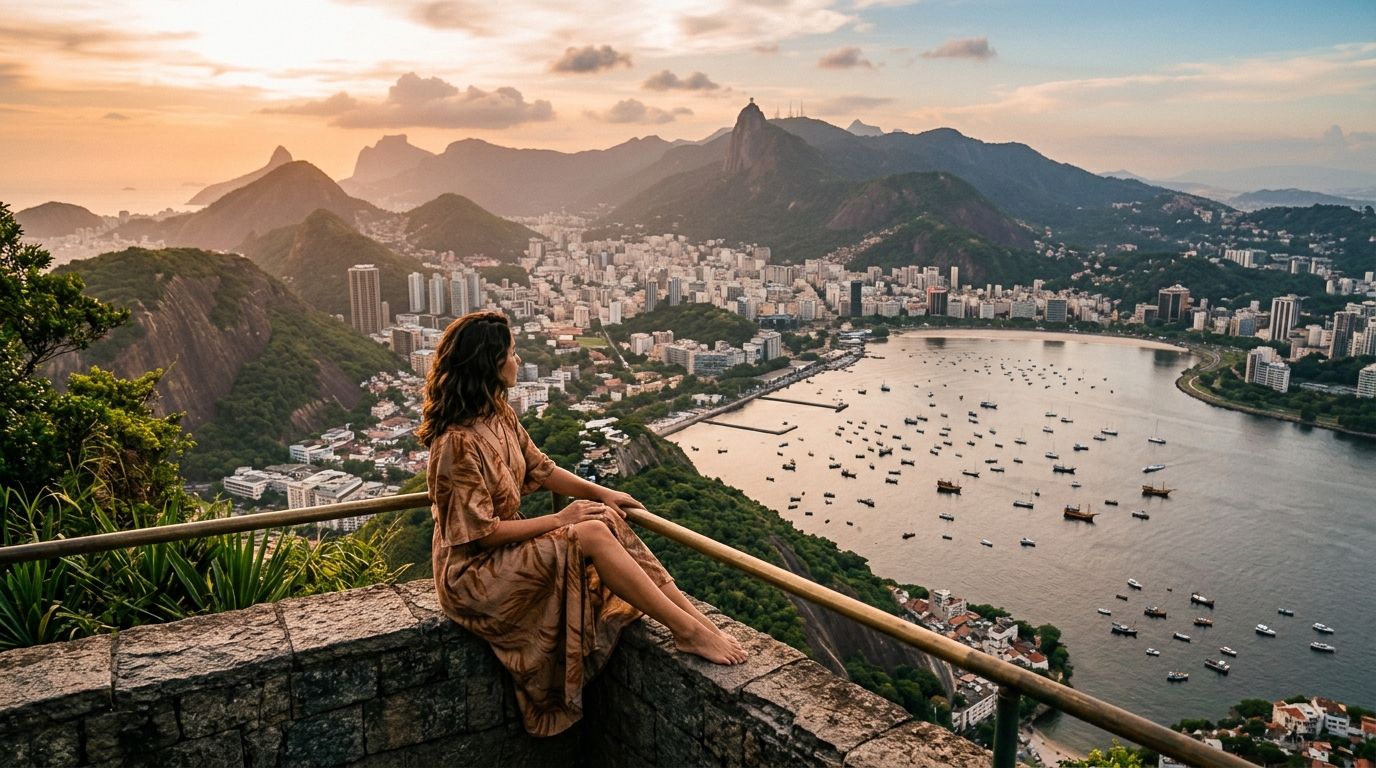
Rio de Janeiro is the obvious entry point for most people, and there's a reason—it's spectacular, slightly chaotic, and densely packed with experience. The city spreads across valleys and beaches, connected by roads that seem designed to challenge your sense of direction. Christ the Redeemer sits above it all on Corcovado mountain, and yes, the views matter, but what matters more is the cable car ride up Sugarloaf Mountain, where you see the entire geography click into place. The beaches—Copacabana, Ipanema, Leme—work differently than you'd expect. They're social spaces first, tourist attractions second. Locals treat them like public living rooms.
Wander into the Lapa neighbourhood at night and you'll find live music pouring from every doorway. It's not curated for tourists; it just happens. Spend a morning in Botafogo eating fresh açai bowls and watch how the city actually moves.
São Paulo confuses first-time visitors. It's a megacity with nine million people, sprawling across a plateau. It has no obvious centre, no theatrical geography. It's museums (the MASP is world-class), street art that's genuinely political, restaurants at every conceivable level, and a nightlife that runs until breakfast. The Pinheiros neighbourhood is where the energy concentrates. The Liberdade district is the largest Japanese neighbourhood outside Japan—which tells you something about how this city ingests the world.
The Amazon requires real planning and honest expectations. The Amazon Rainforest is real and immense, but you don't "see" it from a boat. You experience it through heat, humidity, and the weight of biological presence. Manaus is the gateway city—weathered, commercial, humid. From there, lodges operate deeper into the basin. The further you go, the more genuine the experience, but also the less comfortable it becomes. Budget 4-5 days minimum if you're serious.
Iguazu Falls (specifically the Brazilian side) is genuinely one of the planet's most overwhelming natural phenomena. It's 275 separate waterfalls across a 2.7-kilometre span. The Argentine side is technically superior for photography, but the Brazilian side gives you the complete scale. Expect crowds—this is one of earth's most-visited natural sites. Go early, stay at the park, and let the mist and noise recalibrate your sense of proportion.
Salvador (Bahia state) is where you encounter Afro-Brazilian culture at its densest. The Pelourinho neighbourhood—cobbled streets, colonial buildings, strong light—has the texture of somewhere genuinely historic, not restored-for-tourism. The food is specific and rooted. The music isn't background; it's conversation.
The Pantanal operates seasonally. During the wet season (May-September), water levels rise and jaguar sightings peak. During the dry season (October-April), you see more animals concentrated around remaining water. Either way, expect heat, humidity, and genuine wildlife experience. This is where Brazil shows you what wilderness actually looks like at scale.
Planning Your Visit: The Practical Reality
Best Time: This depends entirely on what you're doing. Rio works year-round, but December-March is summer and gets crowded and expensive. May-September is cooler and drier. The Amazon is accessible year-round, but July-August offers better water clarity. The Pantaval's best wildlife viewing is May-September.
How Long: Brazil rewards longer stays. Two weeks is minimum if you're covering multiple regions. A week in one area (Rio + São Paulo, or Amazon + Iguazu) is reasonable. A month reveals patterns and nuances.
Getting Around: Domestic flights are affordable and necessary. São Paulo to Rio is four hours by bus or two by plane—flights cost 150-300 BRL. The flight network is extensive. Long-distance buses exist but are genuinely long (São Paulo to Rio is 6+ hours). Flying makes more sense once you're in-country.
Crowds and Seasons: The Rio Carnival (February/March) transforms the city into controlled chaos. Accommodation triples in price. If you're not specifically going for carnival, avoid it. Iguazu Falls gets 1.2 million visitors yearly—mornings are slightly less crowded than afternoons. The Amazon and Pantaval see fewer total visitors but charge higher prices for genuine experiences.
Language: English is less common than in other major tourist destinations. Portuguese is spoken everywhere. Learning basics is worthwhile. In major cities, younger people speak English; in rural areas and smaller towns, English is rare.
Currency: The Real (BRL) is the currency. Most places accept cards, but cash is still essential for smaller vendors and favela communities. ATMs are reliable in cities.
Safety: Brazil has genuine poverty and real crime in specific neighbourhoods. Avoid flashing wealth. Stick to established neighbourhoods. Don't wander favelas without a guide. That said, millions of tourists navigate the country safely yearly. Sensible precautions work.
Nearby Places Worth Your Time
Ouro Preto (Minas Gerais): A colonial mining town frozen in the 18th century. It's genuinely preserved, not reconstructed. The churches are stunning, the history is weighted, and the surrounding landscape is dramatic. It's 5-6 hours from Rio by bus.
Paraty: A seaside colonial town between Rio and São Paulo. It's become slightly touristy, but authentically so. The old town is carless, the beaches are genuine, and the restaurants are solid. It works as a stop between major cities.
Lençóis Maranhenses National Park: Enormous sand dunes alternating with lagoons. It's visually stunning and genuinely off most people's itineraries. It's remote (fly into São Luís, then overland), but worth the effort.
Is It Actually Worth Visiting?
Yes. But not because it's Instagram-perfect or because you'll have your life changed. Brazil is worth visiting because it's one of the few remaining places where you experience genuine scale—geographic, cultural, human. The contradictions are real. The beauty doesn't come with a filter. The cities are complicated and alive. The landscapes are overwhelming.
You'll get frustrated with bureaucracy. You'll navigate language barriers. You'll see wealth and poverty in sharp relief. You'll also eat food that tastes like somewhere real. You'll meet people who move through their days with a kind of purposefulness that Western efficiency never quite captures. You'll stand in front of something so vast it breaks your sense of your own importance.
That's Brazil. It's not aspirational. It's actual.
Quick Facts About Brazil
- Population: 215 million people
- Size: 8.5 million square kilometres (5th largest country)
- Capital: Brasília (planned city, 1960)
- Language: Portuguese
- Currency: Brazilian Real (BRL); 1 USD ≈ 5 BRL
- Visa Requirements: Many nationalities can enter visa-free for 90 days
- Time Zone: Multiple zones (UTC-3 to UTC-5); São Paulo is UTC-3
- Electricity: 110V or 220V depending on region; bring adapters
- Best Time for Most Regions: May-September (dry season)
Final Thoughts
Brazil is the kind of place that requires you to accept chaos as part of the architecture. The infrastructure isn't perfect. The weather is intense. The distances are enormous. But that's precisely what makes it real in a way many destinations aren't.
Start in Rio if it's your first time—the city orients you. Move to São Paulo for density and culture. Push toward the Amazon or Pantaval if you want landscape. The country builds on itself. Each region adds texture.
When you return home, you won't have a simple story. You'll have contradictions and complexity and genuine memory. You'll understand why Brazil keeps rewriting itself and why people there seem perpetually engaged in the process of living rather than performing it.
For planning your route through Brazil, exploring videos of different regions, and booking activities that match your style, use Touratu's interactive map. You can see how regions connect, watch travellers navigate different routes, and lock in experiences before you arrive. Brazil is best explored with real information rather than assumptions.
Loading activities…
