
Sichuan Travel Guide: Top Attractions Worth Exploring
Sichuan: Where Spice and Soul Meet in Southwest China
The smell hits you first—not the Sichuan peppercorns that will later numb your mouth, but something older. It's incense and old stone, carried down from the mountains on air that feels thicker than what you breathe in Shanghai. You're standing at the base of a thousand-year-old temple, watching monks in maroon robes move between prayer halls with the unhurried certainty of people who've done this ten thousand times before. This is Sichuan. Not the postcard version, but the real one.
Most visitors arrive with expectations shaped by travel blogs: pandas, hot pot, dramatic landscapes. Sichuan delivers on these, yes, but it does something quieter and more profound. It presents a China that Western travellers rarely encounter—one where ancient philosophy still structures daily life, where food is considered medicine, and where the relationship between people and mountains runs deeper than aesthetics.
What Makes Sichuan Genuinely Different
Sichuan isn't one destination. It's a constellation. The province covers an area the size of Spain, dropping from the Tibetan plateau in the west to flatlands in the east, and this geography shapes everything—the climate varies, the people shift, even the dialect splinters into dialects. What holds it together is something harder to define: a particular intelligence, a pragmatic warmth, and a food culture that's genuinely revolutionary.
The Giant Pandas get the international attention, and I understand why. Watching a panda at the Chengdu Research Base is an experience that hits differently than you'd expect. They're not performing for you; they're simply existing at their own pace, and there's something humbling about being witness to that. But the pandas are a doorway, not the destination.
What stays with you is Chengdu itself—a city of 16 million that somehow doesn't feel like a city. People genuinely move slower here. Old men play mahjong in doorways at ten in the morning. Tea houses operate like community centers, where someone might sit for six hours with a single pot of tea. This isn't sleepiness; it's intentionality.
Then there's Emei Mountain, one of Buddhism's four sacred peaks. Rising 3,099 meters from the Sichuan Basin, it's a vertical pilgrimage that forces you to move through different climates and different states of mind in a single day. You start in subtropical warmth and end in alpine forest where rhododendrons bloom at impossible angles.
And Jiuzhaigou—the name means "Nine Villages Valley"—presents a landscape so unlikely it feels invented. Turquoise lakes, layered waterfalls, and forests that seem to have arrived from a different era. It's been damaged by earthquakes, rebuilt, damaged again, and remains defiant.
What to Actually Expect
In Chengdu: Traffic moves fast, but pedestrians don't. The city is planned around tea culture and community. You'll find yourself in narrow lanes called hutongs where residential life spills into the street—children learning calligraphy, old women selling vegetables, someone's laundry drying above your head. The Wide and Narrow Lanes tourist area reconstructs this atmosphere but sanitizes it; the real version lives in the blocks just beyond where fewer phones appear.
Food here isn't gentle. Sichuan peppercorns create a tingling numbness that locals call má—the sensation becomes addictive. You'll order something and ask your server, "Is this spicy?" They'll say no. It will be. Learn to nod at this contradiction.
The Chengdu Research Base operates much like a zoo, with the advantage of genuine conservation work happening behind the scenes. You'll walk through bamboo groves, and pandas will be there, mostly sleeping. The novelty wears off faster than you'd think, but if you stay quiet and watch long enough, you notice their casual grace.
At Emei Mountain: Start before dawn if you're hiking the whole thing—most people don't. The first sections are manageable, through temples and restaurants built into the mountainside. By mid-mountain, the infrastructure thins. The real pilgrimage happens here, where you walk because walking is the point. Bring water. Your knees will thank you when you reach the Golden Summit, where monks have maintained a presence for over a thousand years.
The cable cars offer an alternative if your knees object. No shame in this. The experience shifts but remains valuable—the perspective from above shows you the scale of the mountain and the scale of your own journey.
At Jiuzhaigou: Book tickets in advance—daily capacity is limited. The park operates like a national treasure (because it is), with boardwalks protecting the lakes and hiking trails threading through the forest. You can cover the major attractions in one day, but two days reveal the subtler magic. Stay in Jiuzhaigou town itself rather than in Chengdu if possible; the light is different here, especially at dawn.
Expect crowds during Chinese national holidays. Expect rain in summer. Expect the infrastructure to be efficient but impersonal. And expect that the actual beauty of the place will still move you regardless.
Planning Your Visit
Best time: May to October. Spring brings wildflowers and active temples. Summer brings rain and crowds. Autumn brings clarity and color. Winter is beautiful but challenging—many facilities reduce hours, and mountain passes close unpredictably.
Duration: Two weeks is ideal for understanding Sichuan's geography and rhythm. A week works if you're focused. You need a minimum of three days just to shift out of travel mode and actually feel the place.
Transportation: Fly into Chengdu (CTU). It's the main hub. From there, buses connect to everywhere. The highways are modern and efficient. For Jiuzhaigou, you can take a scenic flight (small, bouncy planes that offer dramatic views) or drive. Driving takes eight hours but teaches you about landscape.
Crowds: Chengdu rarely feels crowded in a suffocating way. Peak seasons bring more people but the city absorbs them. Emei Mountain gets busy during holidays but remains meditative. Jiuzhaigou requires planning—buy tickets online for preferred times.
Practical notes: Your phone's translation app will be useful but not essential—in major areas, English signage exists. Tea culture means you'll drink a lot of tea, which is fine. The water is safe. Bring cash; many temples and small restaurants don't use mobile payment. The altitude isn't severe in Chengdu but rises toward Emei and Jiuzhaigou—give yourself a day to adjust.
Nearby Worth Considering
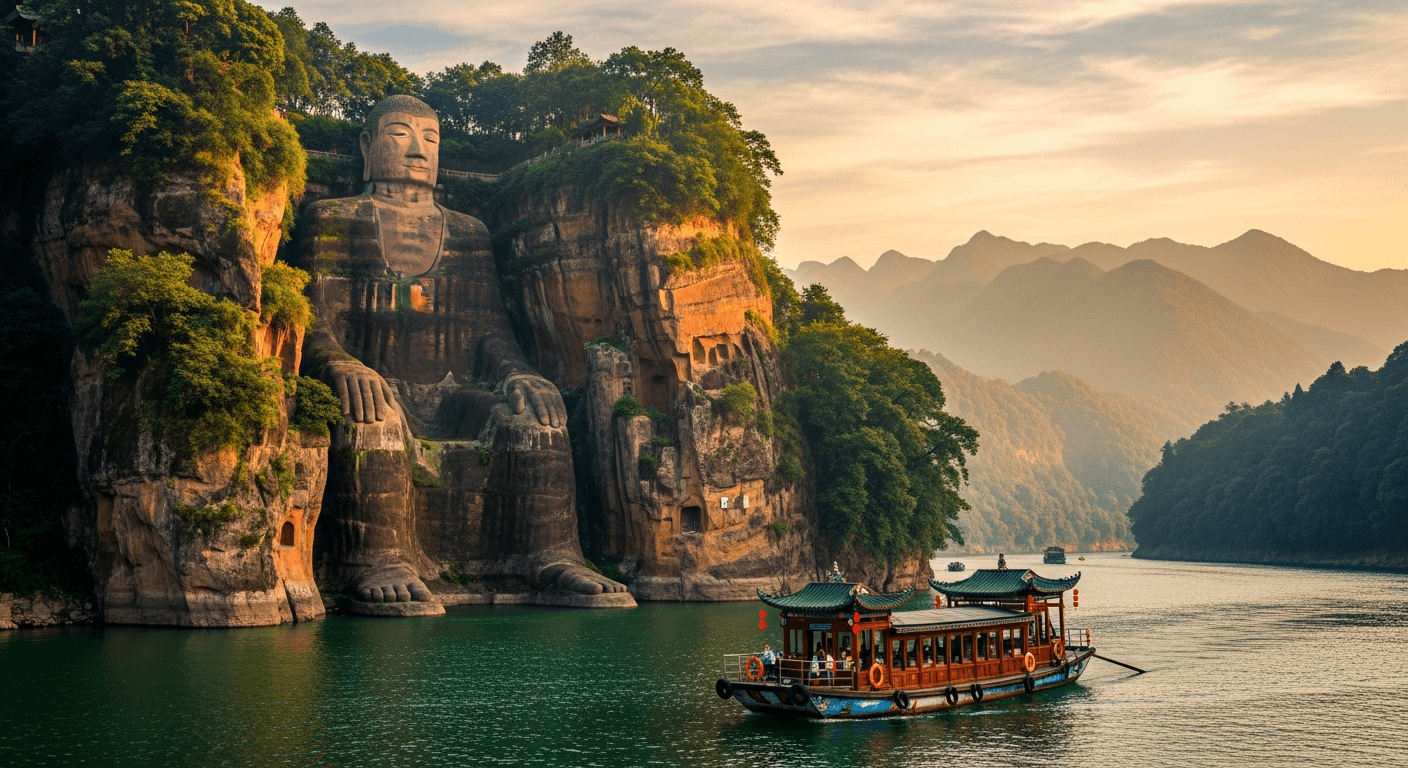
Leshan Giant Buddha (two hours from Chengdu by bus): A 71-meter Buddha carved into a cliff face in the 8th century. You can see it from a boat on the Min River or walk down stone steps carved into the mountain. The engineering involved still impresses when you grasp its scale. The town of Leshan itself is quiet and manageable—a real place where tourism hasn't overwhelmed local life.
Yangzi River Three Gorges (requires more planning but transformative): A four-hour drive northeast from Chengdu takes you to Chongqing, where boat journeys through the Yangzi's dramatic gorges offer perspective on water, erosion, and human history. This isn't a casual addition; it requires rethinking your itinerary. But if you can, do it.
Huanglong (north of Jiuzhaigou): A national park with mineral-rich pools creating terraced lakes of improbable color. Significantly less crowded than Jiuzhaigou. The boardwalks are excellent, and the hikes feel less touristic. Good for people who want natural beauty without the crowds.
Is It Worth Visiting?
Yes, but not for the reason you think.
You don't go to Sichuan to check boxes. You go because the real China—the one that isn't Shanghai's skyline or the Great Wall's stones—lives here. You go because food designed to numb and enliven your mouth simultaneously teaches you something about balance. You go because watching monks move through thousand-year-old routines in 2024 raises questions you weren't planning to ask.
The pandas are real, the landscapes are magnificent, the tea culture is genuine. But the actual gift is smaller and harder to photograph: it's the moment when you stop moving purposefully and sit down with a pot of tea and realize that the old man across the table has been doing this same thing for forty years, and he seems to have figured something out that your schedule hasn't.
Come for the attractions. Stay for the slowness.
Quick Facts
- Best month to visit: October (clear weather, fewer crowds than summer)
- Main city: Chengdu (population 16+ million)
- Language: Mandarin, local Sichuan dialect
- Food specialty: Hot pot, mapo tofu, dan dan noodles
- Sacred mountain: Emei Shan (3,099m elevation)
- Giant pandas: Chengdu Research Base (100+ individuals)
- Natural wonder: Jiuzhaigou Valley (multiple turquoise lakes)
- Average temperature (October): 15-22°C
- Getting there: Chengdu Shuangliu International Airport (CTU)
Where Does Sichuan Fit Into Your Travels?
Sichuan works as a standalone destination or as a junction between other regions. From Chengdu, you can reach Lhasa (Tibet) by bus or flight, head north to Xi'an, or south toward Yunnan. The province is central to understanding modern China—it has history, Buddhism, natural beauty, and a genuine local culture that hasn't been entirely repackaged for consumption.
Use Touratu's interactive map to plot your route through Sichuan's major sites, from Chengdu's tea houses to Emei's temples and Jiuzhaigou's lakes. The map shows distances and travel times, helping you understand how the geography actually works rather than how guidebooks describe it. You can also explore travel videos from other visitors to see how different times of year and different routes reveal different aspects of the province.
Sichuan will change how you think about travel. It's worth the visa, the flight, and the time.
Loading activities…
