
Best Places to Visit in Shandong: Top Attractions Guide
Shandong: Where China's Spiritual Past Meets Coastal Reality
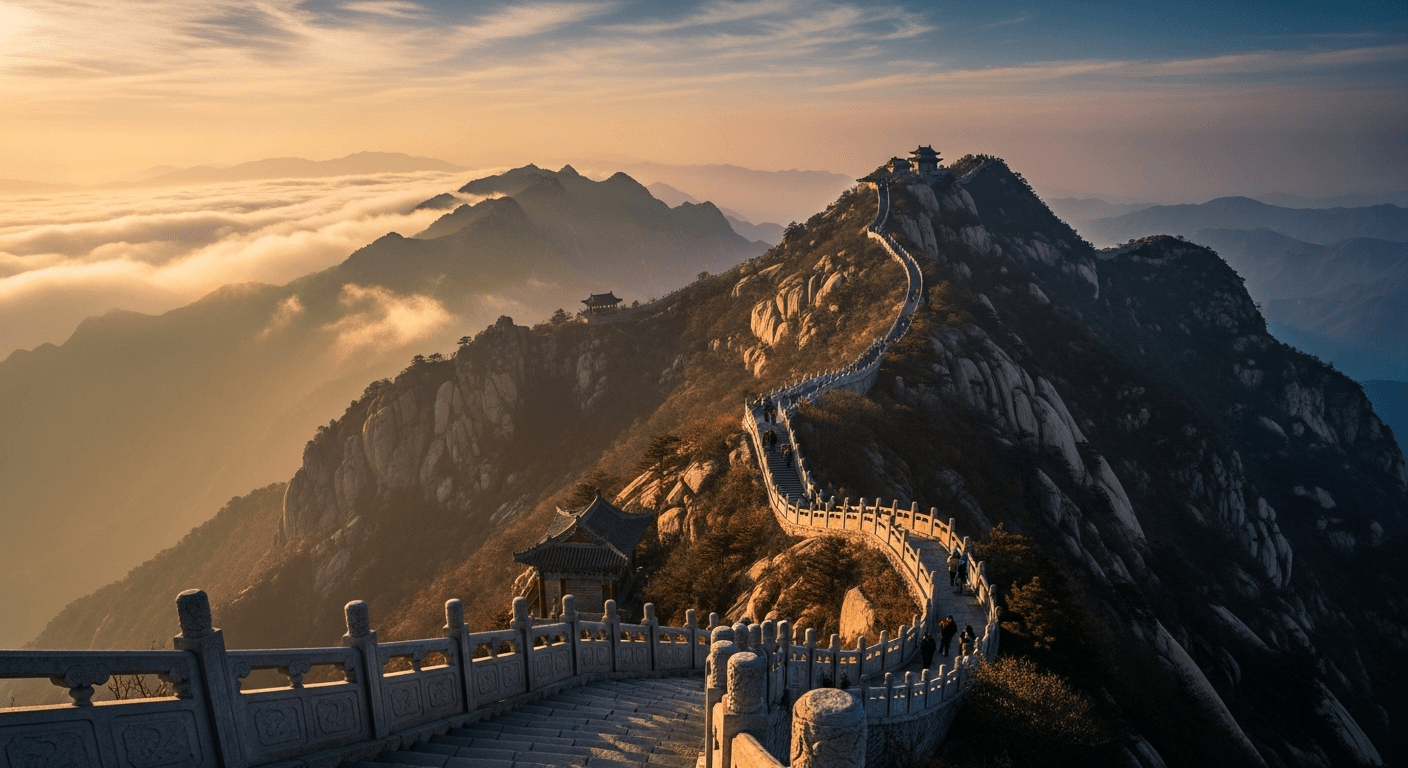
The first time you climb Tai Shan at dawn, you understand why emperors traveled days to stand where you're standing. Not because the view is objectively the best in China—it isn't—but because you're breathing the same thin air they did, placing your boots in worn grooves cut by millions of feet across centuries. The mountain doesn't try to impress you. It simply exists, massive and patient, while you scramble up stone steps wondering how anyone managed this in silk robes.
Shandong isn't about discovering hidden corners that Instagram hasn't found yet. It's about moving through a province that shaped Chinese philosophy, anchored its maritime trade, and sustained its population for thousands of years. You won't find pristine wilderness or undiscovered temples. What you'll find instead is something rarer: a place where the crowds don't erase the meaning.
The Province That Built China's Soul
Shandong sits in eastern China like a historical archive with a pulse. This is where Confucius walked, where the Grand Canal transported rice to emperors, where fishing boats still follow rhythms older than dynasties. The province sprawls across 156,000 square kilometers and contains more layers than most countries—not all of them picturesque, but nearly all of them instructive.
The appeal here isn't singular. You're not coming for one photogenic moment or a specific Instagram backdrop. You're coming because Shandong refuses to reduce itself to postcard simplicity. The architecture matters. The food tastes deliberately constructed. The pace of life feels calibrated to actual human rhythms rather than tourist schedules.
Tai Shan: The Mountain That Matters
Start here if you need to understand how landscape and meaning intertwine in Chinese culture.
Tai Shan has hosted visitors for 3,000 years, which sounds impressive until you realize what that actually means: worn steps, crowded trails, and accommodation options ranging from basic to slightly less basic. You won't experience solitude. You might experience something better—connection with the physicality of pilgrimage.
The mountain itself rises 1,545 meters from a coastal plain, which technically doesn't rank it among China's highest peaks. But topographically, it feels more significant. The climb takes 4-6 hours depending on your pace and which of the nine routes you choose. Most travelers use the central route—the same path emperors historically took—which means you'll share the experience with dozens of others, ranging from determined older Chinese women to Western hikers adjusting their expectations.
The sensory components matter more than the views. The steps warm beneath your hands as you pull yourself up. The vendors at regular intervals sell water at reasonable prices and local specialties like sesame candy that taste better at altitude than they have any right to. The temple at the summit (the Jade Emperor Temple) contains actual history—worn statues, genuine incense smoke, pilgrims who've traveled further than you.
If you arrive for sunrise, you'll experience what made this mountain sacred: that particular quality of light before the valley fully wakes. The view extends across agricultural plains and industrial zones in equal measure—nothing aesthetically perfect, but honest.
Practical approach: Climb in afternoon, stay in basic accommodation near the summit, watch sunrise, descend by noon. This splits the effort and gives you actual summit time rather than just a photo stop.
Qufu: Where Philosophy Still Lives
An hour south of Tai Shan lies Qufu, the birthplace of Confucius and a place that treats intellectual history as seriously as you'd treat a sacred site. Because, for many visitors here, it is one.
The Temple and Cemetery of Confucius occupy significant space here—both literally and culturally. The temple contains 460 rooms and spans 14 hectares. The cemetery holds remains of around 100,000 people descended from or connected to Confucius's lineage. Neither location works as a rush-through destination.
What makes Qufu distinct is that it functions as an actual town, not just a museum overlaid on living space. You can walk the narrow streets, eat at restaurants that predate tourism, and observe how ordinary urban life operates around these extraordinary historical sites. This is genuinely valuable because it situates historical importance within real human context rather than isolating it behind velvet ropes.
The Kong Mansion (attached to the temple complex) reveals daily life at a level of detail most historical sites ignore. Accounting records. Kitchen implements. Letters discussing mundane family matters. It humanizes the historical record in ways that make Confucius feel less like a statue and more like someone's ancestor.
What to actually do: Spend a full day here. Enter the temple compound early to avoid peak crowds. Walk toward the cemetery—most visitors concentrate around the temple buildings. Have lunch at a family-run restaurant rather than commercial tourist spots.
The Coast: Qingdao and Reality
Qingdao operates on different logic than the philosophical interior. This is a working port city that happens to attract tourists, not a city designed primarily for them. The distinction matters.
The Bavarian architecture from its German colonial period (1897-1914) exists alongside Soviet-era concrete and contemporary Chinese development. The visual clash makes sense historically but doesn't create the picturesque atmosphere marketing materials promise. What it does create is authenticity—the city actually looks like where international trade happened, not how a travel magazine imagines it should.
The beaches are functional. People swim in them. Families vacation here. The seafood restaurants along the waterfront cook what people actually want to eat rather than what they assume tourists expect. You'll find freshly caught fish prepared in Shandong style—simpler, cleaner than neighboring Guangdong cuisine, with emphasis on the ingredient rather than elaborate sauce.
Qingdao's real value is as a reset point. After moving through temple complexes and mountain trails, a city with actual commerce, traffic, and complexity restores perspective. You can spend an evening watching the harbor at dusk, eat at a street market, stay in a reasonable hotel, and remember that tourism is just one layer across how people actually live.
Where to stay: Skip the waterfront hotels unless budget allows. The residential neighborhoods inland offer better restaurants and actual street life. The city feels less performed here.
Weihai: When Nobody's Watching
Three hours up the coast from Qingdao sits Weihai, a port city that foreign tourists largely bypass. This makes it simultaneously less convenient (fewer English speakers, fewer international amenities) and more instructive (you see how Chinese people actually vacation in beach towns).
The waterfront park hosts evening strollers. The seafood market operates with genuine commercial intent. There's no curated tourist experience, which means you navigate by directness rather than signage. This appeals to certain travelers and frustrates others—but it's honest.
The city functions as a breathing space between larger attractions. You're not here to "do" Weihai. You're here to move through it, eat at the right spots (locals will direct you), and continue. The beach itself is perfectly ordinary, but that ordinariness lets you observe the actual mechanics of coastal Chinese leisure rather than touristic performance of it.
When to Come and How to Move Through It
Timing: September and October offer the best combination of manageable weather and smaller crowds. Spring (April-May) works if you don't mind light crowds and variable temperature. Summer brings heat and tourists in equal measure. Winter clears crowds but brings cold that makes mountain climbing unpleasant.
Duration: Two weeks allows genuine depth—four days for Tai Shan and surrounding mountain areas, three days in Qufu, three days in Qingdao proper, two days in Weihai, and overflow days for the inevitable spontaneous detours that make travel valuable. Ten days becomes tight but functional if you skip Weihai and extend Qingdao.
Movement: Trains connect major cities efficiently. Regional buses handle distances under 200 kilometers. Taxis exist everywhere and remain inexpensive. Getting around requires minimal planning but benefits from flexibility—if something interests you, capacity exists to linger.
Near Shandong: Extensions Worth Considering
Hangzhou (south, 8 hours by high-speed train): West Lake offers the aesthetic beauty Shandong coastlines don't emphasize. Go if you specifically want photogenic landscape; skip if you're satisfied with honest scenery.
Beijing (north, 5 hours by high-speed train): Every visitor to northern China presumably factors this in. Use Shandong as a southern extension rather than a standalone destination if you're building a larger itinerary.
Dalian (northeast, 4 hours by bus): Another port city operating on similar logic to Qingdao and Weihai, with marginally better infrastructure and less distinctive character. Include if you're building a coastal tour; skip if you're not particularly interested in industrial-maritime infrastructure.
Is It Actually Worth Your Time?
This question depends on what you expect from travel. If you're collecting photogenic moments and checking experiences off a list, Shandong won't satisfy you. Tai Shan involves crowds. Qufu requires genuine intellectual interest to justify the visit. Qingdao resembles dozens of other port cities. The coast is ordinary.
But if you travel to understand how people lived and continue to live—how landscape shaped philosophy, how commerce shaped cities, how ordinary leisure operates—then Shandong offers compressed insight into something real. The province doesn't perform for cameras. It simply continues existing as it has for thousands of years, now with tourists occasionally walking through.
You'll see crowded temple complexes and unremarkable beaches. You'll eat food that tastes intentional rather than decorative. You'll move through cities where actual life happens alongside tourism rather than instead of it. You'll climb a mountain that has hosted pilgrims since before most countries existed.
That's genuinely uncommon. Most destinations have chosen a single narrative. Shandong contains multitudes.
Quick Facts
- Population: 101 million (one of China's most populous provinces)
- Best entry point: Qingdao by air; Jinan by rail from Beijing or Shanghai
- Cost per day: $40-80 USD for accommodations, $15-25 for meals at non-tourist restaurants
- Transport card: RFID cards work across buses and trains
- Language: Standard Mandarin; English literacy varies by location
- Visas: Standard Chinese tourist visas apply
Shandong won't transform your life or deliver the transcendent moments travel marketing promises. What it will do is position you inside actual Chinese history—not curated, not simplified, not filtered for international comfort. You'll stand where emperors stood, walk streets merchants used for centuries, and eat food prepared with genuine technique rather than tourist assumptions.
Use Touratu's interactive map to explore these routes in detail, watch travel videos from other visitors who've navigated these same paths, and build your actual itinerary based on how people genuinely move through Shandong's cities and mountains. The platform shows you real routes, real timing, and real experiences from people who've already climbed these steps.
Loading activities…
