
Best Places to Visit in Adjara, Georgia: Honest Guide
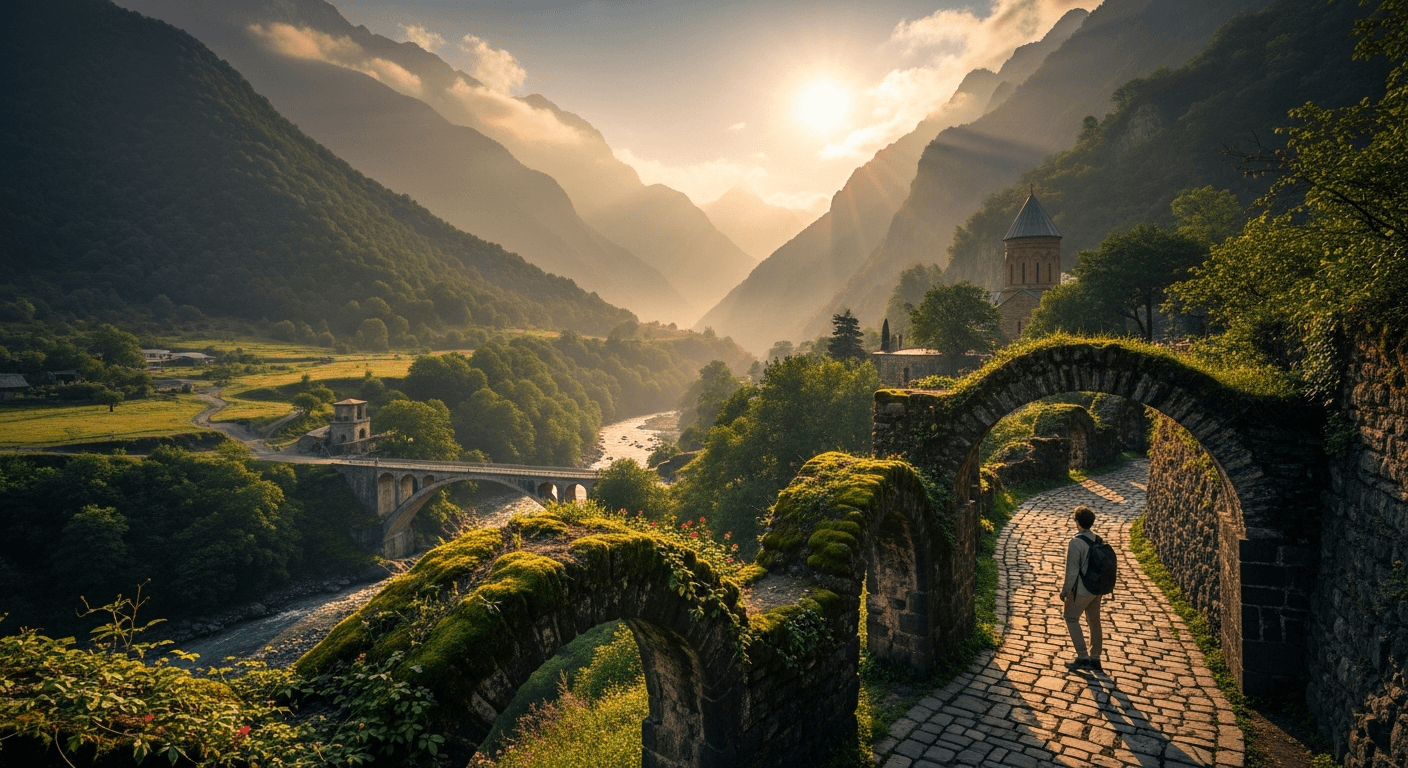
Adjara: Georgia's Misunderstood Coastal Province
The minibus ride down to Batumi happens at dusk, when the Caucasus Mountains shift from green to grey. You're crammed between a grandmother carrying live chickens and a teenager in a football jersey, watching the landscape collapse from alpine forest into subtropical wetland. The air changes. It becomes thicker, salted, alive with something you can't name. By the time you reach the coast, the Black Sea is invisible—just a suggestion of vastness beyond the palm trees and Soviet apartment blocks.
This is Adjara, Georgia's southwestern autonomous region, and it's nothing like the rest of the country. While the highlands offer dramatic peaks and wine valleys, Adjara exists in a different climate entirely—both meteorologically and culturally. It's humid, complex, historically fractured, and profoundly itself. Most travellers skip it for Tbilisi's grit or Kazbegi's mountains. That's precisely why you should linger here.
What Actually Happens When You Stay in Adjara
Adjara works on a different frequency than the rest of Georgia. For centuries, it was a border region—literally and spiritually. The Ottoman Empire held it until 1878. Russia claimed it. Stalin was born here (in nearby Gori, though Adjarians prefer to forget that detail). Islam and Christianity coexist in ways that feel genuinely balanced, not tourist-friendly. Women in the market wear headscarves and designer jeans simultaneously. There's a mosque next to a restored medieval church, and nobody finds this remarkable.
The region's character emerges not in monuments but in moments. Sit in a chaikhana—a traditional tea house—in Batumi's old town and you're watching three generations of the same family argue in Georgian-accented Russian, sipping tea so strong it's almost black. Walk through the botanical garden at 4 p.m. and you'll find more local teenagers on dates than tourists. Order khachapuri (cheese-filled bread) in any direction and you'll get it with butter and egg, slightly different from the Tbilisi version, made by someone who's been doing it the same way for twenty years.
Adjara doesn't perform. It exists. And that's what makes it genuinely interesting.
The Experience: What to Actually Do Here
Batumi's Contradictions
Start in Batumi, the capital, because it's the only real entry point and because it deserves more than a three-hour stop. The city is genuinely chaotic—a Black Sea port town mixing Soviet infrastructure, Ottoman architecture, new money, old poverty, and persistent tourism aspiration. The seafront boulevard is lined with casinos and upscale restaurants where men in sunglasses conduct business. The old town's narrow streets hold family-run guesthouses, hole-in-wall restaurants serving adjarian khachapuri (it's different here—fluffier, more butter), and a small but substantial history you can actually sense.
Walk to the Ali Pasha Mosque, built in 1999 but designed to feel Ottoman. It's peaceful and genuinely functioning—not a museum piece. The nearby Armenian Church is equally maintained but emptier. This isn't contrast for drama's sake; it's just how Adjara works. Step into the Batumi Archaeological Museum if you want context about the region's layered past, but honestly, the city itself is the museum.
The botanical garden, on the edge of the city, is legitimately excellent. It's not theatrical. It's 120 acres of subtropical plants from around the world, planted with actual horticultural logic rather than Instagram optimization. You'll see locals picnicking here more than tourists. The sea views from the upper terraces are genuine. The pathways wind through different zones—bamboo groves, palm collections, a Japanese garden that's aging gracefully rather than fading. Spend two hours here, not because you're checking a box, but because it's quiet and well-maintained and requires no emotional investment.
Beyond Batumi
Gonio Fortress, 12 kilometers south, is a legitimate historical site—a 2,000-year-old fortress that's been rebuilt, conquered, and restored by empires most people have forgotten about. It sits on the Rioni River, right at what used to be a border. The views across the valley into Turkey are functional rather than dramatic. The fortress itself is small, walkable in 45 minutes, and teaches you something about why this region mattered to everyone. There's a café where you can drink coffee and watch fishermen in the river. This is better than most fortress visits.
Sarpi, 15 kilometers north of Batumi, is where the Mtkvari River meets the Black Sea. It's become a modest beach destination, but it's not overrun. There are restaurants built right on the sand, still family-operated, still serving fresh fish. You can see the meeting point where freshwater and saltwater collide—it's visible as a line of foam. Kayaking tours operate here, but they're small-scale. Most people are just swimming or reading or eating. On a quiet day, it feels like an actual village where people happen to invite tourists to stay.
The Mtkvari River valley itself is worth exploring. Rent a car or negotiate with a taxi driver for a half-day. The river runs through gorges and villages, past traditional houses, past orchards. Stop in Sarpi village (different from Sarpi beach) and walk up into the foothills. The landscape is dense and humid and genuinely subtropical—nothing like the rest of Georgia.
Planning: The Practical Things
When to Go
Summer is hot and humid—July and August can exceed 28°C with 80% humidity. This is when Batumi fills with Turkish and Azerbaijani tourists. It's not unpleasant, but it's crowded.
Autumn (September to November) is optimal. Temperatures drop to 15-22°C, humidity decreases, and tourists thin out. The sea is still swimmable until mid-October. The light is better for walking around. Everything feels less urgent.
Spring (April to May) is also good—15-20°C, flowers blooming in the botanical garden, still manageable crowds.
Winter is mild but grey and occasionally rainy. Most tourism infrastructure operates, but the sea is cold and occasionally rough.
Duration and Movement
Spend 3-4 days in Adjara if you want to actually see it. One day is enough to confirm it's not your thing. Two days is a rushed weekend. Three days lets you spend time in Batumi without constant urgency, take a day trip to Sarpi or Gonio, and sit in a café without watching your watch.
Getting here: Batumi has an airport with regular flights from Tbilisi (1 hour), Istanbul, and other regional hubs. If you're in Tbilisi, the minibus ride takes 5-6 hours and costs around 30 GEL ($11). Trains run this route less frequently. Driving takes 5-6 hours via the main highway.
Crowds and Expectation Management
Adjara is not undiscovered. Turkish and Azerbaijani tourists have figured it out. The beach areas can be packed in summer. The botanical garden sees school groups. But it's still less saturated than Tbilisi or Kazbegi. You won't need reservations everywhere, but in summer, it's sensible to book accommodation in advance.
Prices are reasonable but not dirt-cheap. A decent guesthouse room is 40-60 GEL ($15-22). Restaurant meals range from 15-50 GEL ($5-18) depending on where you eat. The botanical garden is 5 GEL ($2). Nothing requires compromise.
Nearby Worth Considering
Sarpi (15 km north) – Already mentioned, but worth emphasizing. It's a functional beach village where you can actually do something rather than just look. The boat rides to see the river meeting the sea are touristy but not terrible. More importantly, local restaurants here serve genuinely good fish at non-inflated prices. Stay overnight if you can.
Gonio Fortress (12 km south) – A legitimate historical stop rather than a tourist attraction. It's solid, contextual, and brief. Pair it with lunch at a riverside restaurant. You can easily combine this with a visit to Sarpi in a single day, though you'd be rushing.
Akhaltsikhe (140 km inland) – If you want to extend into the broader region, this Ottoman-era town has a fortress, traditional bazaar, and still-functioning hammams. It's also where you can actually see how Islam and Christianity coexist beyond the coast. It's a full day trip from Batumi, or a stopping point if you're heading toward Turkey or Armenia.
Honest Assessment: Is Adjara Worth the Effort?
Yes, if you're already in Georgia and have the time. No, if you're flying specifically to visit this region. Adjara won't fundamentally change your life. You won't have transcendent moments or meet a stranger who becomes your best friend (though you might). What it offers is genuine complexity—a place that doesn't simplify itself for visitors, where tourism is an afterthought rather than the operating system.
Go if you're curious about coastal Georgia, want to understand how different this region is from the highlands, or simply need a place that feels less arranged than most travel destinations. The botanical garden is genuinely excellent. The food is legitimate. The people are patient with tourists but not dependent on them.
Don't go expecting dramatic peaks, wine tastings, or fairy-tale villages. Adjara is subtropical, humid, historically complicated, and proud of being different. It rewards attention and time rather than a quick camera click.
Quick Facts About Adjara
- Best time: September-November or April-May
- Getting there: Flight or minibus from Tbilisi (5-6 hours)
- Duration: 3-4 days minimum
- Main town: Batumi (capital and primary tourist hub)
- Climate: Subtropical, humid, warmest in July-August
- Language: Georgian, Russian widely spoken, some Turkish near Turkey border
- Currency: Georgian Lari (1 GEL ≈ $0.37 USD)
- Accommodation: 40-60 GEL per night for decent guesthouse
- Food: Adjarian khachapuri, grilled fish, fresh seafood
- Getting around: Minibuses, taxis (negotiate in advance), some car rentals
Final Thoughts
The minibus ride back to Tbilisi happens at dawn. You watch the landscape shift again—subtropical humidity giving way to mountain air, palms disappearing, the horizon rising. Someone has left a football match on a small screen mounted above the dashboard. Half the passengers are sleeping. The grandmother from your first trip down isn't here, but there are other people with their own reasons for this journey.
Adjara doesn't demand to be loved. It simply exists—a corner of Georgia that chose its own pace and refused to fully participate in either the Ottoman or Soviet or modern tourist versions of itself. That's its actual value. Not as a destination that will blow your mind, but as a place that lets you understand Georgia more completely.
Want to explore Adjara's routes and see travel videos from the region? Check out Touratu's interactive map, where you can discover detailed routes, transportation options, and real footage from travellers who've navigated these paths.
Loading activities…
