
Best Places to Visit in Karnataka: Top Attractions
Karnataka's Best Places to Visit: Beyond the Instagram Crowds
The scent hits you first—cardamom and wet earth mixing with diesel fumes as your bus climbs into the Western Ghats. You're watching coffee plantations slide past your window, wondering if you've made a mistake booking a holiday in just one Indian state. Then the mist rolls in, thick and grey, and suddenly you understand why people have been drawn to Karnataka for centuries. It's not trying to impress you. It just exists, quietly rewarding the people patient enough to explore it.
Karnataka isn't a destination you hear about in the same breath as Rajasthan or Kerala. That's partly why it remains one of the more honest travel regions in India—less performed, more lived. Over two weeks across the state's various pockets, I've found that the real appeal lies in moving between distinct worlds: the silhouetted temples of Hampi, the cool refuge of Coorg's forests, the Victorian heritage of Bangalore, the coffee-scented mornings of Chikmagalur.
Let me walk you through what actually matters when planning time in Karnataka.
The Hampi Question
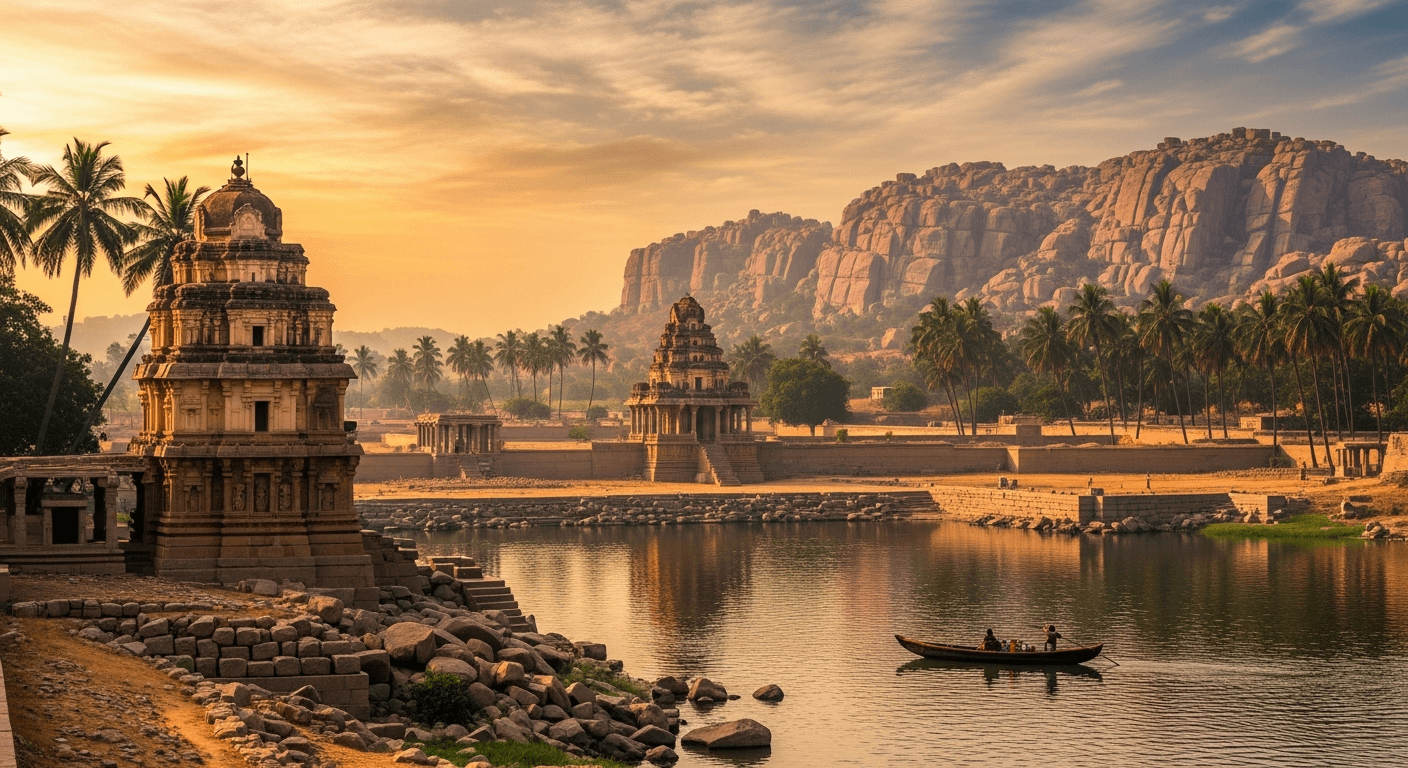
If you're visiting Karnataka, Hampi almost certainly appears on your list. The ruins scattered across boulder-strewn terrain belong to the 16th-century Vijayanagara Empire, and yes, the architecture is exceptional. But the actual experience depends entirely on when you arrive.
I made the mistake of visiting during peak season—November through February. The main temple complex was packed with tour groups moving in synchronized waves, each guide speaking slightly louder than the last. The Achyutaraya Temple, probably the most striking structure, had three different groups inside simultaneously. It wasn't bad, exactly. Just compressed.
I returned six weeks later in early March, knowing I'd missed the "ideal" window. Instead, I found something more useful: morning quiet. I could sit with the Krishna Temple for an hour without company, watch the light change on the bazaar ruins, actually hear the wind through the banana leaves. The Virupaksha Temple's entrance corridor, stripped of crowds, suddenly felt like a space rather than a checkpoint.
The thing about Hampi is that the scale is deceptive. You could spend a day bouncing between the main temples in the central area, or you could spend three days wandering the less-documented ruins to the south. The boulder landscape itself—those massive granite formations scattered like dropped marbles—is almost as significant as the buildings. People often photograph the temples and miss the landscape entirely.
Stay in the village itself, not the nearby town of Hospet. The village guesthouses are basic but functional, and you'll catch the site at dawn before tourism infrastructure kicks in. Bring water. Actually, bring more water than you think you'll need. The site is exposed, relentless, and the sun doesn't negotiate.
Coorg's Practical Escape
Coorg (Kodagu district) sits about eight hours south of Bangalore, and it's where Karnataka sheds its arid plains and becomes something softer. The Western Ghats create a climatic shift so pronounced that you notice your breathing change within an hour of arrival.
This is coffee country, and the landscape reflects it—endless rows of medium-shade trees, pepper vines climbing wooden frames, cardamom plants clustered in the understory. It's less visually dramatic than the tourist photography suggests, but it's also less crowded than hill stations like Ooty. The afternoons here are genuinely cool, the rainfall is reliable (monsoon season especially), and the locals run actual lives rather than tourism theatres.
What you actually do in Coorg depends on your tolerance for structured activities. The plantation stays offer coffee tours—you walk through the fields, learn about sorting and processing, drink some freshly brewed coffee. It's genuine enough if you go to smaller, family-run estates rather than the resort circuit. Abbey Falls is a predictable stop and moderately attractive, though the approach involves walking past several gift shops. The Nagarhole National Park has wildlife but requires realistic expectations about spotting animals; jungle drives are more about forest ambience than guaranteed sightings.
What I preferred was unstructured time: sitting in the morning mist with a book, walking without a destination between villages, eating at local restaurants rather than resort restaurants. Coorg rewards slowness more than destinations. Three days minimum; five days if you have them.
The best time is October through January—cool, mostly dry, green from recent monsoon. February onwards starts getting warmer, and June through September is heavy rain (which is beautiful but makes road travel unpredictable).
Bangalore's Necessary Complexity
I'm about to say something heretical: Bangalore is worth more than an airport stop.
The city has an identity crisis—it's trying to be India's tech hub while maintaining heritage neighborhoods that feel genuinely lived-in. This contradiction is actually what makes it interesting. You get the coffee culture (probably the best in India), excellent bookstores, restaurants that aren't trying to cater to international tourists, and pockets of real history.
Spend a morning at Lalbagh Botanical Garden. It's less about the plants (though the specimens are impressive) and more about observing Bangalore's daily life—older people walking, couples meeting discreetly, families picnicking. It's utterly unglamorous and completely authentic. The adjacent Vidhana Soudha, the state legislature building, is Victorian architecture that actually impresses upon closer inspection.
The old city around Sunkeswara Temple and the bazaars is chaotic and functional in ways that feel Indian—not packaged, not simplified. It's the Bangalore that tourism marketing ignores, which is exactly why it's worth an afternoon.
Be realistic about traffic. Bangalore's infrastructure hasn't matched its growth, so getting around the city consumes time. Use metro where possible, accept long travel times, or just plan fewer activities and spend more time in neighborhoods. Vijayanagar, Indiranagar, and Basavanagudi are liveable areas without trying too hard.
Chikmagalur's Morning Logic
Higher elevation than Coorg, cooler, surrounded by coffee plantations and spice gardens. Chikmagalur often gets compared to Coorg and almost always loses—it's positioned as "quieter" or "less touristy," which usually means it has fewer restaurants and less reliable accommodation.
Actually visit Chikmagalur for the Kemmanagundi trek and the Mullayanagiri peak. The views across plantations toward the plains genuinely warrant an early morning hike. The Baba Budangiri range creates a different landscape from Coorg—higher, more exposed, less verdant. If you're heading from Coorg, it's a different enough environment to justify the travel time.
Two nights is sufficient. The accommodation is genuinely basic—don't expect much beyond function. The appeal is in the terrain and the quiet, not the infrastructure.
Hassan's Underselling
Belur and Halebidu are temple complexes that occupy the opposite spectral end from Hampi's scale and fame. They're smaller, less documented, and feature some of the finest Hoysala architecture you'll see anywhere—intricate carvings, proportional elegance, and spaces that actually feel designed rather than monumental.
Most visitors rush through both in a single day visit from Hassan. That works logistically, but you miss the subtlety. The temples reward looking closely—the narrative reliefs tell stories, the carvings have humor and personality, the proportions are deliberately elegant.
Hassan itself is a working town with no tourism infrastructure pretension. Sleep there, eat there, move slowly through the temples. You're looking at a two-day detour, not a day trip.
Planning the Actual Route
Karnataka works best as a two-week journey rather than scattered visits. A practical routing:
Week One: Bangalore (2 nights) → Chikmagalur (2 nights) → Coorg (3 nights). This moves you through elevation and landscape progressively.
Week Two: Coorg → Hampi (1 night in transit, 2 nights in Hampi) → back toward Bangalore via Hassan (1 night).
Alternatively, if you prefer less driving, split it: Bangalore + Coorg on one trip, Hampi + Hassan on another. The state is large enough that trying to do everything in a short timeframe means substantial road time.
Best time overall: October through February (dry, cool, roads clear). Avoid: June through September (heavy monsoon), March through May (heat, before monsoon freshens things).
Getting around: buses are reliable and frequent, trains exist but are slower, car rental with driver is genuinely affordable and worth the comfort and flexibility.
Is It Worth Your Time?
Karnataka requires some adjustment if you're expecting dramatic Instagram destinations. Hampi delivers on the architectural spectacle. Coorg and Chikmagalur are genuinely pleasant for relaxation. Bangalore is useful for unpacking what modern India actually feels like.
What Karnataka isn't: a quick highlight reel destination. What it is: a region where different landscapes and sensibilities actually exist within proximity, where you can spend time without feeling rushed, and where tourism infrastructure is sufficient but not overwhelming.
Worth two weeks? Absolutely. Worth a quick regional add-on? Only if you're in the area already and have time. The travel time from other Indian hubs doesn't justify a rushed visit.
Quick Facts
- Best entry point: Bangalore (major airport, train connections)
- Best time: October through February
- Duration: 10-14 days for proper experience
- Language: Kannada, but English works in tourist areas and cities
- Budget: Mid-range hotels ₹1,500-3,000 per night; food ₹300-800 per meal
- Visa: Standard Indian tourist visa
Karnataka reveals itself to people willing to move slowly. It's not performing for you. It's not trying to be anything other than what it is—a state with multiple distinct regions, decent infrastructure, and enough history and landscape to occupy you for weeks. Spend the time, and you'll understand why Indians vacation here rather than just passing through.
Explore Karnataka's routes and hidden trails on Touratu's interactive map, or watch our travel videos to see how these experiences actually unfold when you're there.
Loading activities…
