
Bahrain Travel Guide: Islands, Souks & History
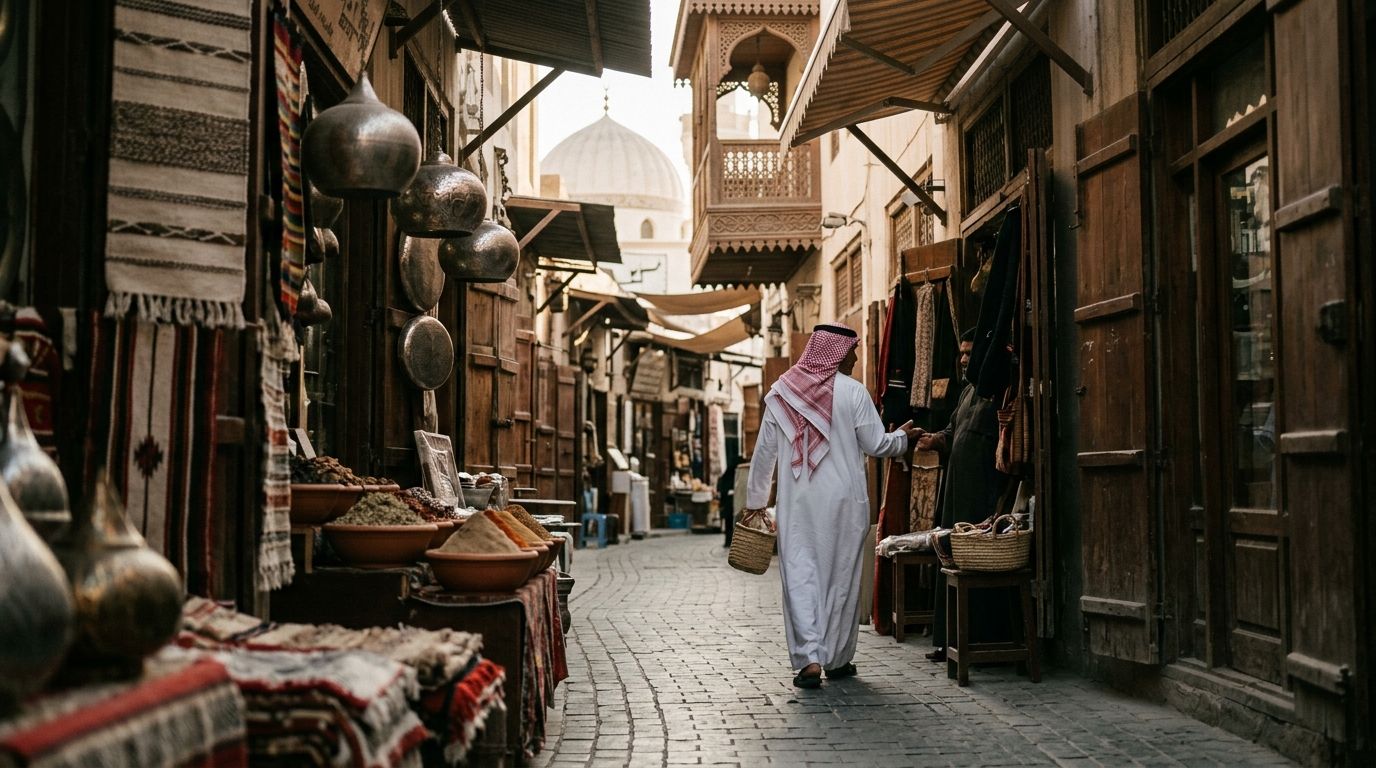
Bahrain: The Island That Defies the Desert Stereotype
You're driving across the King Fahd Causeway at dusk, and something shifts. The landscape flattens into something almost alien—pearls of light catching on water, modern towers rising abruptly from the horizon, and beneath it all, the sense that you're arriving somewhere that doesn't quite fit the conventional Middle Eastern narrative. This is Bahrain: an island nation so small you could theoretically cross it in an hour, yet somehow it's managed to become one of the region's most intriguing destinations precisely because it doesn't try to be what you expect.
Most people arrive with assumptions shaped by their geography textbooks or news cycles. What they find instead is something messier, more interesting, and far more human than the stereotype allows.
Why Bahrain Actually Matters
The surprise with Bahrain isn't that it's beautiful—though parts genuinely are. It's that it's honest in a way that can feel uncommon among Gulf destinations. This island spent centuries as the world's pearl-diving hub before oil arrived, and that history still saturates the place. Walk through the old souks and you're not wandering through a carefully curated heritage museum. You're moving through a living market where merchants still negotiate, where prices actually fluctuate, and where the rhythm follows something older than tourist accommodation.
Manama, the capital, is a study in collision. Arabic call-to-prayer echoes across neighborhoods where Indian, Filipino, and Bangladeshi workers outnumber locals. Strip malls sit adjacent to traditional wind-tower architecture. Financial district glass towers overlook fishing villages that haven't fundamentally changed in decades. This isn't picturesque chaos—it's the genuine texture of a small nation trying to balance modernization, tradition, and cultural identity all at once.
The genuine draw, for observant travelers, is exactly this: Bahrain is still figuring itself out. It hasn't fully committed to becoming a theme park version of itself. You're visiting while the place is still real.
What Actually Happens When You're Here
Manama and the Old Town: The starting point for most visitors. The Pearl Monument—that massive oyster sculpture on the waterfront—marks the entrance to the old district. Ignore the impulse to just photograph it. Instead, head into the narrow lanes behind it where the Al-Aliyah Souq spirals in on itself. Unlike the sanitized shopping experiences elsewhere, this market still operates largely for locals. You'll find spice merchants, textile vendors, and sections dedicated entirely to incense and perfumes. The architecture overhead—wooden screens, carved doors, narrow wind towers designed to catch breezes before air conditioning—tells the story of how people actually lived here.
The Bahrain National Museum sits nearby and is worth a full afternoon. The pearl diving exhibits alone give context to why the ocean matters here—the displays of diving equipment, old maps, and personal accounts of divers who spent their summers at sea make the connection visceral. The Islamic art section is quietly impressive, containing pieces most tourists miss while rushing through Gulf destinations.
The Fort and the Archaeological Sites: Qal'at Al-Bahrain (Bahrain Fort) occupies what locals call "Five Finger Island" and archaeologists call one of the region's most significant sites. Built in the late 1600s, the fort sits atop layers representing thousands of years of occupation. The actual structure is modest—stone walls, a few towers, rooms arranged around courtyards—but the setting matters. You're standing in a place where Dilmunite traders operated, where Portuguese colonizers left their mark, where pearl merchant families once negotiated deals. The onsite museum contextualizes the layers below.
If you drive south, the island reveals something different: agricultural land, small villages, and fragments of older Bahrain. The Barbar Temples, predating the Islamic sites by centuries, feel genuinely remote despite being less than 30 minutes from downtown.
Beaches and the Water: The coastline is straightforward—no dramatic cliffs or turquoise lagoons. Expect calm, warm water and understated beaches. Al-Jazira Beach on the west coast draws locals on weekends. The island's main appeal regarding water is snorkeling around coral reefs and shipwreck dives, not the beach aesthetic itself. The water clarity is variable depending on season, but the marine life is present.
Bahrain's Modern Contradiction: The Financial Harbor district offers a perspective on what the island is actively becoming—gleaming developments, expensive restaurants, international brands. It's less about visiting and more about understanding the visual context of how Bahrain is reinventing itself post-oil-dependency.
Planning Your Visit Practically
Duration: Two to three days is realistic. One day feels rushed. Four days requires genuine interest in exploring beyond the obvious circuit. A week? You'd be living here more than visiting.
Timing: October through March offers comfortable weather—temperatures in the 20-28°C range. April through September is genuinely hot. Ramadan significantly affects the rhythm of the place; many restaurants close during daylight, business hours shift, and the evening energy changes entirely. If you're not prepared for those changes, visit outside that month.
Getting Around: Taxis are reasonable. Ride-sharing apps work. Renting a car makes sense if you plan to visit Fort Qal'at, the southern temples, or scattered beaches without relying on taxis. Traffic is manageable compared to neighboring Gulf cities. The causeway to Saudi Arabia means you can technically drive north, though the border crossing adds complexity.
Entry: Most Western passport holders receive a tourist visa on arrival. Check current requirements before booking—regulations shift. The airport is small and handled quickly.
Money Matters: The Bahraini Dinar is fixed against the US dollar. ATMs work reliably. Accommodation ranges from modest to luxury; mid-range options are limited. Dining out is more expensive than food cost suggests, particularly in the new developments. The souks offer better value.
The Crowd Factor: Bahrain doesn't attract mass tourism like Dubai. You'll see other travelers, but you won't be navigating human rivers. This makes it easier to move, negotiate space, and actually observe daily life without performing for cameras.
Nearby Places Worth the Drive
Saudi Arabia (via Causeway): If you hold a visa, the King Fahd Causeway is one of the world's genuinely unusual border crossings. The drive itself—crossing from island nation to vast peninsula—creates a visceral shift in scale. Al-Khobar and Dammam on the Saudi side offer a different Gulf experience, though Bahrain's visa situation is more straightforward.
Qatar (Flight, 1 hour): Doha is different in scale and approach—more controlled, more expensive, more explicitly constructed. A quick flight across the water shows how varied Gulf nations actually are despite surface similarities.
United Arab Emirates (Flight, 1.5 hours): Abu Dhabi and Dubai, if you haven't visited, show the other end of the modernization spectrum. But honestly, if you're in Bahrain specifically because you want less commercialized, less predictable Gulf experience, you might skip the UAE.
Is Bahrain Actually Worth Your Time?
The honest answer depends on what you're after.
If you want Instagrammable perfection, dramatic landscapes, or the certainty that every tourist experience is perfectly calibrated—no. Go to Dubai or Oman.
If you're curious about how actual people in the Gulf region live, work, and navigate tradition against modernity, interested in maritime history, drawn to markets that still function as markets, or simply willing to spend time in a place that hasn't fully decided what it's selling—yes, absolutely.
Bahrain offers something increasingly rare: a Gulf destination that still feels partially undecided. It's transitional. That's exactly what makes it interesting.
Quick Facts
- Population: ~1.7 million (roughly 50% expat)
- Area: 780 square kilometers
- Capital: Manama
- Currency: Bahraini Dinar (1 BHD = ~$2.65 USD)
- Language: Arabic (English widely spoken)
- Religion: Islam (about 70% Shia, 30% Sunni)
- Best Time to Visit: October to March
Bahrain won't give you the postcard moment you might get elsewhere in the Gulf. What it offers instead is the chance to move through a place that's genuinely working through its own questions—about tradition and progress, about identity in a globalized world, about what it means to be small in a region of titans. That's more interesting than most travel.
Explore Bahrain's neighborhoods, markets, and coastal routes on Touratu's interactive map, where you can trace your route between the old souks and modern harbors. Watch our travel videos to see how locals navigate daily life, how markets actually function, and what the island reveals beyond the expected tourist circuits. Plan your movements, bookmark locations, and discover the Bahrain that exists when you move beyond the guidebook.
Loading activities…
