
Azerbaijan Travel Guide: Top Things to Do & Bookable Activities
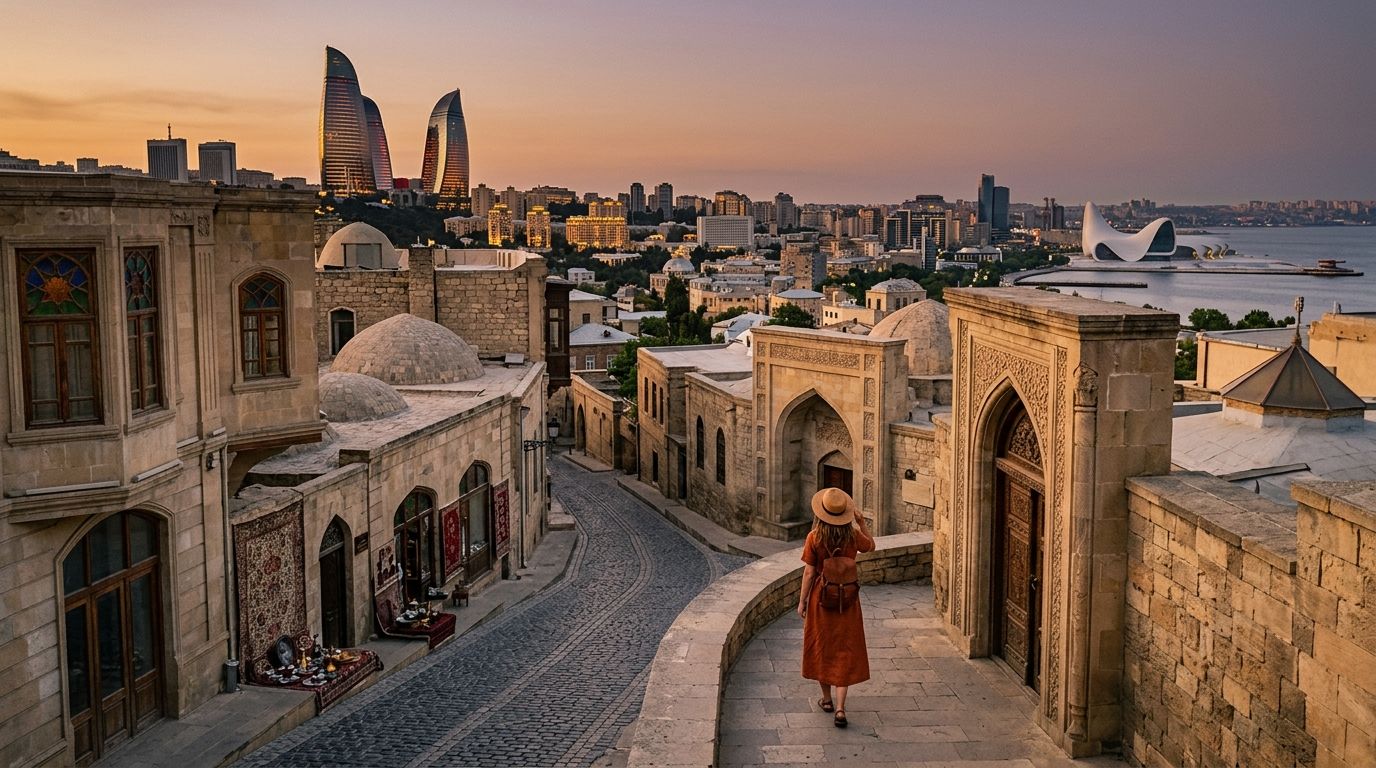
Azerbaijan: Where Empires Collided and Fire Mountains Still Burn
The Caspian wind hits you before anything else. You're standing on the edge of Baku's Old City, watching the modern skyline rise like gleaming teeth behind centuries-old stone walls, and for a moment you're suspended between worlds. Behind you, the Flame Towers glow electric orange against the night sky. Ahead, the medieval ramparts hold their ground. This is Azerbaijan in miniature: a place where ancient Silk Road traders, Persian dynasties, Soviet engineers, and 21st-century oligarchs all left fingerprints on the same landscape.
I came here skeptical. Azerbaijan doesn't have the narrative pull of its neighbors—Turkey's grandeur, Iran's mystique, Georgia's alpine romance. But that skepticism dissolved somewhere between the mud volcanoes of Gobustan and the underground lakes of Shaki, replaced by a genuine curiosity about a country that refuses easy categorization.
What Actually Makes Azerbaijan Worth Your Time
Azerbaijan operates on a different scale than most Caucasus destinations. You're not here for one iconic mountain or a single ancient shrine. Instead, you're collecting a series of genuinely odd, specific experiences that don't fit typical travel narratives.
The Yanar Dag—literally "burning mountain"—is the most obvious example. A hillside where natural gas seeps through the earth and burns continuously, creating a landscape that looks like someone left the oven on. No special effects, no tourism theater. Just geology doing something unusual. Standing in front of it at sunset, watching flames dance across barren rock while your phone battery drains from the heat, you feel the particular weight of witnessing something real. It's not sublime or majestic. It's simply strange, and that strangeness has a value tourist boards rarely acknowledge.
Beyond the obvious geological attractions, Azerbaijan works as a three-dimensional history lesson. Baku's Old City actually feels inhabited—people live in those stone houses, argue in doorways, hang laundry from medieval windows. The Carpet Museum displays textiles that represent centuries of cultural continuity. The Ateshgah Fire Temple reveals how Zoroastrian practice threaded through this region for millennia. These aren't curated exhibits behind velvet ropes; they're components of an ongoing cultural conversation.
What genuinely distinguishes Azerbaijan, though, is how it manages modernity without erasing the past. The Heydar Aliyev Center—a Zaha Hadid building that looks like liquid architecture—sits minutes from ancient temples. You can breakfast in a 500-year-old caravanserai and lunch in a shopping mall. Rather than feeling jarring, this juxtaposition somehow works. It suggests a culture confident enough to not treat progress and heritage as enemies.
What to Expect: Moving Through the Country
Baku demands time, but not as much as you'd think
Most visitors allocate a week to Azerbaijan and concentrate entirely on Baku. That's reasonable but incomplete. The capital itself needs two days. Day one: Old City, Carpet Museum, Ateshgary (the fire temple on the outskirts). Day two: the Heydar Aliyev Center, the modern seafront, and one evening watching the Flame Towers illuminate. The architecture alone warrants this investment—Baku's skyline represents a genuine architectural moment, neither pastiche nor typical post-Soviet brutalism, but something with actual ambition.
The city's restaurant scene has evolved beyond Soviet canteen stereotypes. Lokanta 1999 and Chinar offer contemporary takes on Azerbaijani cuisine—that crucial balance between Persian and Turkish influences, heavy on pomegranate, lamb, and herbs like dill and cilantro. Plov, the signature rice dish, arrives differently at every table. The variation isn't marketing; it's regional authenticity. Seafood resonates here (Caspian sturgeon, white fish), and fresh breads appear at every meal.
Baku's pace is manageable. It lacks the tourism machinery of Istanbul or Tbilisi. You won't find yourself herded through attractions or navigating crowds of Instagram tour groups. The tradeoff: fewer English speakers outside tourist zones, less obvious signage, streets where you actually have to orient yourself. This actually feels refreshing.
Gobustan and Shaki complete the picture
A day trip from Baku to Gobustan gives you mud volcanoes (miniature versions that burble like small brown lava lamps) and ancient petroglyphs carved into rock faces. The petroglyphs document hunting scenes and ritual moments, touchable evidence of humans documenting their lives 5,000 years ago. The mud volcanoes look like something alien. Both exist within an hour of Baku.
Shaki, a three-hour drive north, offers what Baku doesn't: actual Caucasus landscape. The Khan's Palace here represents 18th-century Azerbaijani craftsmanship at its peak—intricate tilework, honeycomb ceilings, rooms designed around light and geometry. It's one of the few structures in the region that justifies the adjective "exquisite" without irony. The town itself sits in a valley, feels genuinely provincial, and offers a slower experience. One full day suffices, though two allows proper breathing room.
The experience feels less touristed than it should
Even in peak season, you won't find yourself part of large organized groups. Museums are quiet. Restaurants serve locals more than visitors. The Flame Towers parking lot might fill up, but you're never waiting in lines or experiencing the grinding compression of popular sites in Turkey or Georgia. This absence of tourism apparatus cuts both ways—fewer services and amenities, but also fewer performances, fewer Instagram-optimized experiences.
Planning: The Practical Layer
Best timing
April through May and September through October. Spring offers lush mountains and mild Caspian breezes; autumn provides clarity and cooler temperatures ideal for walking cities. Summer brings oppressive heat to Baku (often exceeding 35°C) and crowds. Winter is genuinely cold and can feel isolating, though December and early January have their own gray charm if you prefer empty cities.
Duration and routing
Minimum three days yields Baku plus a day trip. Five days allows Baku, Gobustan, and Shaki without feeling rushed. A week opens possibilities for mountain drives, the Absheron Peninsula (oil derricks, abandoned villages, nuclear waste), or deeper penetration into regions beyond typical tourist circuits.
Most visitors fly into Baku and rely on internal flights to travel distances. A domestic flight to Ganja (west) takes 90 minutes. Driving yourself requires international licenses and nerves—Azerbaijani traffic operates under a different rulebook. Hiring drivers (negotiated through hotels) provides better alternatives. Public buses connect major towns but operate on flexible schedules.
Crowd assessment
Unlike popular Caucasus destinations, Azerbaijan doesn't experience crushing overtourism. Even Baku's Old City remains navigable year-round. This means better access to experiences but sometimes fewer creature comforts and English-language signage. You're not battling crowds, but you're also not guaranteed restaurants with English menus or staff trained in international tourism hospitality.
Nearby Places Worth Considering
Georgia (border crossing at Red Bridge) Three hours from Baku. The Caucasus become dramatically vertical on Georgia's side. If you're extending regional time, Georgia offers mountain hiking, wine regions, and architectural moments (churches clinging to cliffsides) that Azerbaijan doesn't. The border crossing involves paperwork but remains relatively straightforward.
Quba: Mountain town and waterfall Two hours northeast from Baku. Quba represents Caucasus foothills without the intensity of Georgia. Red village (Kızcızı) features traditional architecture and lower tourism density than Baku. Waterfalls exist nearby. It's a half-day excursion but works if you have additional time.
The Absheron Peninsula Literally across the water from Baku, this stretch of coast offers abandoned Soviet infrastructure, oil pumps in shallow water, and villages built on stilts. It's post-industrial in a specific way—not beautiful, but authentically strange. Best with a guide who knows which buildings are accessible.
Is It Actually Worth Visiting?
Yes, but with reservations.
Azerbaijan works if you're curious about places beyond obvious tourist circuits. It functions well if you appreciate geology, history, and architectural eccentricity. It rewards travelers who enjoy finding their own way, who prefer quiet museums to crowded landmarks, who see value in experiences that don't photograph perfectly.
It doesn't work if you need mountains for mountain's sake, if you're seeking pristine wilderness, or if you prefer destinations with clear, established tourism infrastructure. It disappoints if you expect ancient ruins (they're minimal), dramatic natural wonders (they're geologically odd rather than visually overwhelming), or beach resorts (the Caspian isn't appealing for swimming).
The honest assessment: Azerbaijan is interesting, underdeveloped for mass tourism, and offers experiences unavailable elsewhere in the Caucasus. It's worth five days if you're in the region. It's not a destination that justifies organizing your entire travel year around it.
Quick Facts
- Capital: Baku
- Population: 10 million (6.1 million in capital area)
- Official language: Azerbaijani (Turkish dialect)
- Currency: Azerbaijani Manat (AZN); approximately 1.7 to 1 USD
- Best time: April-May, September-October
- Visa: Most nationalities receive visa-free or on-arrival entry
- Getting around: Domestic flights, hired drivers, occasional buses
- Water: Safe to drink in major cities
- Electricity: 220V, European plugs
Closing: Your Next Move
Azerbaijan doesn't fit neat travel narratives, and that's precisely what makes it valuable. It's a destination for travelers ready to sit with complexity, to appreciate places that don't announce themselves loudly, to find meaning in geological anomalies and quiet museums.
To explore routes, dive deeper into specific regions, and see what activities align with your interests, check out Touratu's interactive map. You'll find detailed routing options, travel video recommendations showing how different areas actually feel, and bookable activities—everything you need to move from curiosity to planning.
Loading activities…
