
2 Days in Toronto: Perfect 48-Hour Itinerary
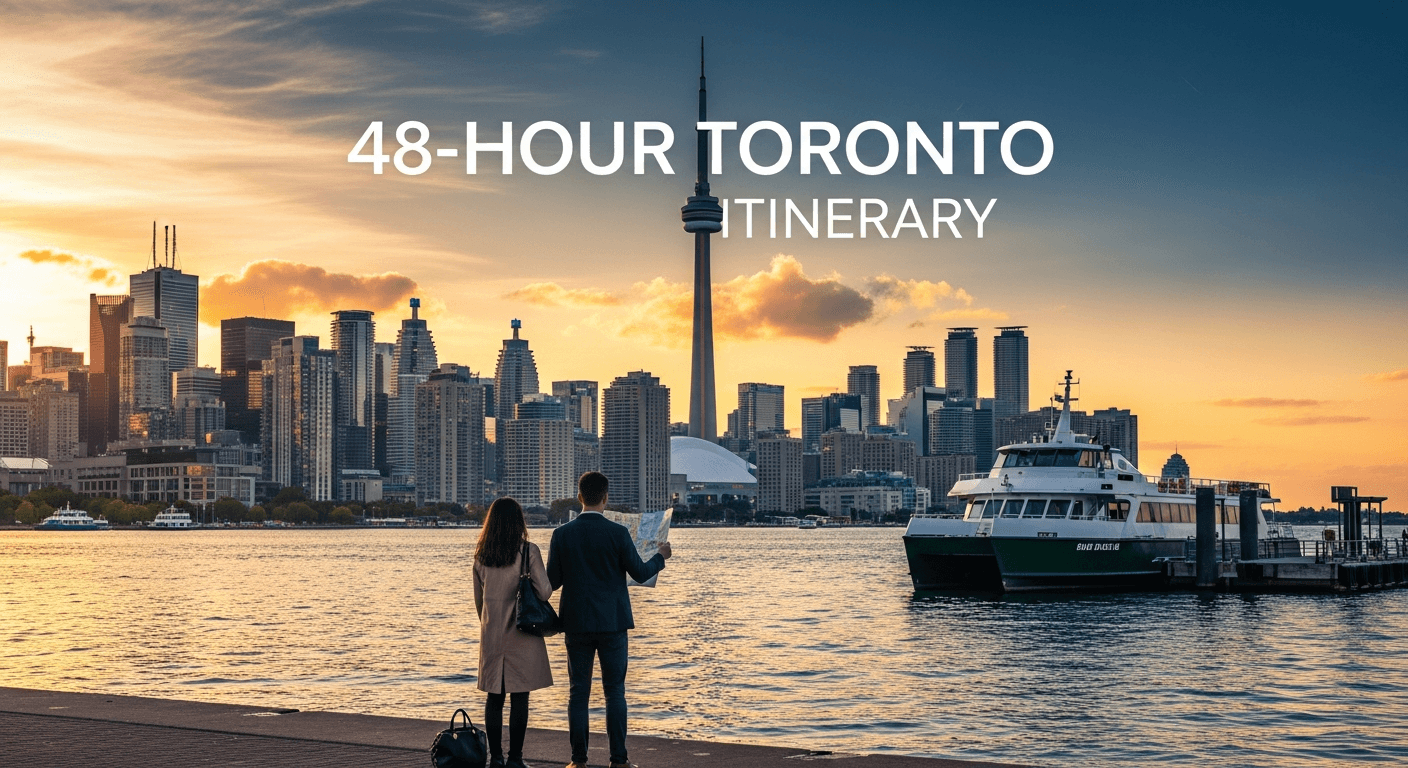
2 Days in Toronto: A Realistic 48-Hour Exploration
The moment your train pulls into Union Station, you feel it—that particular electric hum of a city that doesn't need to announce itself. The cavernous hall with its Beaux-Arts ceiling, the steady stream of people moving with purpose, the smell of coffee and possibility. Toronto doesn't perform for visitors. It simply exists as a functioning, complicated, deeply real city, and that's precisely what makes 48 hours here so rewarding.
Most first-time guides to Toronto read like shopping lists. But two days isn't enough to tick boxes. It's enough, however, to understand why people actually live here, why they stay, why they keep coming back. It's enough to feel the city's texture.
What Makes Toronto Worth Your Time
Toronto is a city built on contradictions, and spending two days here means accepting that you'll encounter wealth and precarity on the same street, see cutting-edge architecture next to Victorian terraces, hear dozens of languages in a single subway car. This isn't a bug—it's the city's genuine character.
Unlike many North American cities, Toronto has an actual downtown where people work, live, and move between genuine neighborhoods rather than tourist zones. The Distillery District isn't a manufactured theme park; it's a genuinely reclaimed industrial space where artists actually have studios. Kensington Market isn't staged for Instagram; vintage clothing shops sit next to butchers, fruit stalls, and restaurants run by families who've operated them for 30 years.
What makes Toronto memorable isn't a single sight. It's the layering—the CN Tower observation deck offering sprawling views, yes, but also the unexpected moment when you turn a corner in the St. Lawrence neighborhood and find a Victorian lane house you didn't know existed. It's standing in the Art Gallery of Ontario's contemporary wing, then walking out into the graffiti-covered alley behind it.
Day One: Downtown and the Waterfront
Morning: Union Station to the St. Lawrence Neighborhood
Start at Union Station not because you must see the building, but because it's the logical entry point and genuinely worth a few minutes of attention. The 1927 station is still functioning, which is rarer than you'd think. Watch how people move through it. Then head east on Front Street toward the St. Lawrence Market.
The market (operating since 1803) is still a working wholesale and retail space, not a heritage performance. Saturday mornings are chaos—the real kind, with locals actually buying groceries. Weekday mornings are quieter but perhaps more navigable. Grab something from one of the vintage food stalls or from one of the restaurants tucked into the building's corners. People will tell you to get a "peameal bacon sandwich." Do that if you want, but honestly, a coffee and a pastry and time spent watching how the market functions is the better investment.
Walk north into the neighborhood itself. These few blocks around St. Lawrence contain some of Toronto's oldest architecture—narrow Victorian terraces, some converted to galleries or small restaurants. There's no forced narrative here. It's just a neighborhood where people have lived and worked for nearly two centuries.
Midday: The Distillery District
Head back south, grab a streetcar or short taxi ride to the Distillery District. This is the one place in Toronto that feels "designed," but it's designed honestly. A 19th-century whiskey distillery complex, it was slated for demolition in the 1990s, then rescued and converted into studios, galleries, restaurants, and shops by actual artists rather than corporate interests.
Walk the main cobblestone street slowly. The red-brick Victorian industrial architecture creates a genuine visual coherence you won't find elsewhere in Toronto. Step into galleries that are actually showing work rather than merchandise. Grab lunch at one of several restaurants that range from casual to serious. Spend an hour here without a destination. This is the closest Toronto comes to the romantic version of itself that tourists expect, and it's worth experiencing precisely because it's earned rather than manufactured.
Afternoon: The Waterfront
Toronto's waterfront is in the middle of reinvention. The old industrial spaces are becoming parks, condos, cultural venues. It's unfinished, which makes it interesting.
Walk or bike along the Waterfront Trail. The Toronto Islands come into view—they're surprisingly close, and you can take a ferry if you have time (you probably don't in 48 hours). What matters more is the sense of the lake, the scale, the reminder that this city sits on something larger than itself. The view from the Harbourfront toward downtown, particularly in late afternoon, is genuinely worth seeing, though not for the reasons postcards suggest. You'll understand why waterfront real estate here is absurdly expensive.
If you want cultural content, the Harbourfront Centre hosts rotating exhibitions and performances. Check what's on. The Power Plant (contemporary art) and the Craft Beer Market are both legitimate uses of time.
Evening: Entertainment District to King West
Head inland to King West, the axis of Toronto's restaurant and nightlife scene. This is where you'll find energy without pretense. There are good restaurants here at various price points, cocktail bars that take drinks seriously without being insufferable, live music venues that still book actual musicians rather than DJs exclusively.
Walk the streets first. The architecture is a mix of historic buildings converted to restaurants and bars, new construction that tried to fit in, and genuine urban mess. There's energy here that's worth experiencing even if you don't stop anywhere.
For dinner, your options range significantly. Pearlpond Café is consistently good for sophisticated Asian food. The Rec Room is enormous, touristy, and occasionally fun if you're in a specific mood. Dozens of other places exist at various price points. The key is walking in somewhere and eating rather than following a guidebook to a "must-try" restaurant.
Day Two: Culture and Neighborhoods
Morning: The Art Gallery of Ontario
The AGO holds one of North America's strongest Canadian art collections, plus rotating international shows. You won't see everything in two hours, and that's fine. Pick a section—contemporary work, the Group of Seven landscape paintings, whatever calls to you—and spend real time.
The building itself (redesigned by Frank Gehry in 2008) is worth noticing. The glass-fronted addition to the historic building creates an interesting dialogue between preservation and modernism. The back gallery spaces that open onto a graffiti-covered alley create the exact kind of contradiction that makes Toronto interesting.
Grab coffee in the gallery café (genuinely good) and leave.
Late Morning: Kensington Market
Walk north from the AGO (it's about 10-15 minutes) into Kensington Market. This is where guidebooks start waxing poetic, and where you need to recalibrate expectations.
Kensington Market is not quaint. It's busy, sometimes chaotic, filled with actual people doing actual things. Vintage clothing shops (some genuinely good, some tourist traps) sit next to butchers, fruit stalls, record shops, and restaurants serving foods from a dozen countries. There's street art, narrow walkways, the smell of cooking from multiple cuisines.
Walk through without a specific destination. Stop where you're interested. Grab lunch from one of the small restaurants or food stalls. Notice the architecture—Victorian rowhouses converted to retail, murals on walls, the layering of commerce and community.
A word of caution: this neighborhood has been gentrifying for years. Some longtime shopkeepers and residents remain; others have been priced out. You can appreciate what's here while acknowledging that complicated reality.
Afternoon: Chinatown or The Annex
From Kensington, you have two good options depending on your energy level.
Chinatown is adjacent and worth an hour. Spadina Avenue is the main axis—it's busy, you can grab lunch or tea, browse shops selling everything from silks to kitchen equipment. It's less "authentic" than Toronto guidebooks suggest (all neighborhoods change), but it's genuinely functioning Chinese commerce and community.
Alternatively, head to The Annex, a neighborhood built around the University of Toronto campus. The university itself is worth walking through if you enjoy Gothic Revival architecture and academic grounds. Bloor Street has bookstores (including a genuinely good independent), cafes, and restaurants. This is where Toronto's intellectual class lives and eats. It's calmer than King West, more genuinely lived-in than the Distillery.
Evening: CN Tower or Queen West
If you want the iconic experience: head to the CN Tower. You'll wait in line, you'll go up 447 meters, you'll see Toronto spread below you in a way you can't from street level. On clear days, you can see Niagara Falls. It's touristy, but it's also genuinely worth doing because the scale of the city becomes clear from height.
If you want the more authentic experience: spend your evening on Queen West, a neighborhood that's been thoroughly gentrified but still has genuine character. Walk between Bathurst and University. The street has galleries, independent shops, excellent restaurants, and bars that actually attract locals. Stop for dinner or drinks somewhere you're drawn to rather than something you researched.
Planning Your Visit
Best Time: Late spring (May-June) or early fall (September-October). Winter is cold—genuinely cold—and summer can be humid and crowded. Shoulder seasons offer the best combination of weather and crowds.
Getting Around: The TTC (Toronto Transit Commission) runs the subway, streetcars, and buses. A PRESTO card (rechargeable transit card) is easiest. The subway system is small compared to New York or London, so most of downtown is walkable. Rent a bike if you want to explore the waterfront and islands.
Duration: Two days works. Three would be better. One is too short to understand the city. Four or more gets into diminishing returns unless you have specific interests (museums, specific neighborhoods, day trips).
Crowds: Toronto attracts steady tourism but isn't overwhelmed year-round. Peak season is summer and fall. Weekdays are quieter than weekends.
Nearby Worth Considering
Niagara Falls (1.5 hours by car or train): The falls are genuinely spectacular if you've never seen them. Go for the natural phenomenon, not the tourist town. The journey takes time, making it a half-day commitment.
Hamilton (1 hour by train): A postindustrial city with an emerging arts scene, good restaurants, and actual character. Less touristy than Toronto, more genuinely evolving.
The Scarborough Bluffs (30 minutes east): Dramatic clay cliffs on the lake's edge. Worth a drive or longer transit ride if you want something outside downtown.
Is It Worth Visiting?
Yes, but for the right reasons. Toronto isn't a romantic city. It's not dramatically scenic. It won't change your life in the way a week in Kyoto or three weeks backpacking Southeast Asia might.
What Toronto offers is the experience of a real North American city in the process of becoming something more interesting than it was 20 years ago. It's a place where you can eat extremely well, see good art, walk through neighborhoods with genuine character, and understand how a modern city actually functions rather than how it performs for visitors.
Two days gives you enough time to feel the city's rhythm, visit the main cultural institutions, eat well, and experience several distinct neighborhoods. You'll leave understanding why people live here, which is a better outcome than leaving with Instagram photos of a tower.
Quick Facts
- Population: 2.9 million (city proper); 6.4 million (greater Toronto area)
- Established: 1793 (as York); renamed Toronto in 1834
- Official language: English (though dozens of languages are spoken daily)
- Time zone: Eastern
- Currency: Canadian Dollar (CAD)
- Visa requirements: Check government websites based on your nationality
Toronto reveals itself best to travelers who approach it as a functional city rather than a destination. Use Touratu's interactive map to plot your routes through the neighborhoods, watch travel videos of the areas you're planning to visit, and return to this guide as you move through the city. Two days is enough to understand Toronto's particular appeal—not for its monuments, but for its neighborhoods, its food, and its quiet insistence on being exactly what it is rather than what tourism expects it to be.
Loading activities…
